Why Is My Dog Barking So Much?

Barking is one of the most common things owners ask about. It's also one of the most misunderstood.
Before you can address it, you have to understand what's actually happening. Barking is communication. It's not random, it's not spite, and it's rarely just a bad habit.
Barking is your dog's most accessible tool for expressing something, and they're using it because something is driving it.
The question isn't "How do I make it stop?" It's "What is my dog trying to tell me?"
This post covers the most common types of barking, when barking might have a medical component, and how a LIMA-guided approach shapes the way each type is handled in practice.
If you're here to learn more about canine behavior and communication generally, it's worth reading in full. If you're already familiar with the different types of barking and want to see how a structured approach works in practice, you can skip ahead to the LIMA section below.

Barking Is Communication, Not Defiance
Dogs bark for a wide range of reasons. Some are instinctive, some are emotional, some are learned, and some are medical. The same bark can mean completely different things depending on the dog, the context, and what's happened in that environment before.
That's why the answer to "How do I stop it?" always starts with the same question: Why is this specific dog barking in this specific situation?
It's also worth stating clearly before going further: the goal is not to eliminate barking entirely.
Barking is normal canine communication. The goal is to understand when it becomes excessive, difficult for the dog to regulate, or disruptive enough to affect the dog's quality of life or the household's ability to function, and to address it in a way that accounts for what's actually behind it.
Types of Barking and What They Mean
The types below cover the most common reasons dogs bark, from instinctive and breed-driven vocalization to learned patterns and emotional responses. Identifying which one fits your dog is the starting point for everything that follows.
One word that appears across several of these types is “frustration”, and it means something different in each context:
Boredom-driven frustration comes from unmet needs.
Barrier frustration comes from loss of agency and an inability to act on what the dog is responding to.
Frustration within reactivity comes from arousal and the inability to reach or escape a trigger.
They can overlap in the same dog at the same time, but they're distinct enough that recognizing which type is driving the behavior matters for how it's addressed.
It is also worth noting that many dogs present with overlapping motivations rather than a single clean category, and the types below are most useful as a framework for assessment rather than a definitive diagnosis.
Alert Barking
This is one of the most instinctive forms of barking. Your dog perceives something in the environment, a person, another animal, a sound, movement at the periphery, and they report it. This is what dogs were bred to do for thousands of years. It's not defiance, it's function.
The problem comes when the threshold is so low that almost anything triggers it, or when the barking continues long after the trigger has gone. Some dogs alert, confirm the situation is not a threat, and settle. Others spiral.
That difference tells you something important about the dog's overall arousal level and emotional regulation.

Territorial Barking
Territorial barking is related to alert barking but driven by something different.
This isn't just a dog noticing something and reporting it. This is a dog actively guarding their perceived space. The energy behind it is different, more sustained, more intense, and often harder to interrupt. The dog isn't asking a question, they're making a statement.
Territory can mean the yard, the house, the car, or anywhere the dog has come to associate with their space. Some dogs have a very narrow sense of territory. Others expand it well beyond what most owners expect. My own dog operates on the assumption that anywhere he visits regularly, spends enough time in, or has marked, now belongs to him.
Understanding what the dog is actually defending matters, because territorial barking that goes unaddressed tends to intensify over time as the dog becomes more practiced and more confident in the behavior.
Predatory Alert Barking
Dogs with strong prey drive will bark at things that trigger their predatory instinct. Squirrels, birds, cats, fast-moving objects, bikes, joggers. The barking here has a different quality to it, often more focused, more intense, sometimes accompanied by fixation, stalking posture, or whining.
This distinction matters because predatory barking has a specific quality that's worth recognizing on its own. The dog isn't communicating distress or making a demand. They're locked onto something.
The focus and body language are distinct from what you see in fear or frustration, and the approach needs to reflect that. A dog in active prey drive requires a handler who understands what they're working with, because the tools and timing that work in that state are not the same ones that work for a dog who is afraid or frustrated.
Breed-Driven Vocalization
Some dogs bark more than others not because something is wrong but because of what they were bred to do.
Beagles were bred to vocalize while tracking. Huskies are communicative by nature and will hold full conversations with you. Herding breeds may bark during movement or when they feel something needs to be controlled. Guardian breeds are wired to alert to anything entering their perceived territory.
This doesn't mean the barking can't be managed. It means the baseline is different, the threshold for vocalization is lower, and the approach needs to account for genetics and drive, not just environment and reinforcement history.

Play, Excitement, and Greeting Barking
Happy barking is real and it's normal.
Some dogs bark during play, when someone they love walks through the door, when they see the leash come out, or when they're anticipating something good. It might be high-pitched, often intermittent, usually accompanied by loose body language and a wagging tail. This is social and communicative and for most dogs it's brief and self-resolving.
It becomes a problem mainly when arousal gets too high and the dog can't regulate back down, or when excitement tips into frustration or overstimulation.
A dog who starts a greeting enthusiastically and ends up spinning, jumping, and unable to settle is a dog whose arousal may need management. For some dogs the pattern has also been heavily reinforced by everyone in the household matching their energy every time it happens, which makes it louder and harder to interrupt over time.
Demand Barking
This is the dog who barks at you for attention, food, to go outside, to get what they want. It works, which is exactly why they do it. Every time the barking gets a response, the behavior gets stronger.
If you've ever given in just to get a moment of quiet, you've reinforced it, and while that's an entirely human response, it compounds over time. Eventually you have a dog with a very clear understanding that barking produces results.
What makes demand barking so stubborn to resolve is that owners often respond inconsistently without realizing it. The barking gets ignored nine times and rewarded on the tenth, and from the dog's perspective, that tenth repetition confirms that persistence pays off. Intermittent reinforcement produces some of the most durable behavior patterns in existence.
A demand barker who has been occasionally rewarded for barking will often escalate before they give up, barking louder and longer at exactly the point where most owners give in, which is precisely what the history of reinforcement has taught them to do.
Anxiety and Fear-Based Barking
Unlike alert barking, where the dog is noticing something and reporting it, anxiety and fear-based barking comes from a dog who is genuinely struggling, and it tends to look more frantic as a result.
The body language often signals distress before the barking even starts, with tension through the body, scanning, an inability to settle, and ears pinned or hyper-forward. You might also see pacing, and barking that escalates rather than resolves, getting louder and more persistent as the trigger continues rather than tapering off once the dog has assessed the situation.
What distinguishes this type from alert or territorial barking is the emotional state underneath it. An alert dog reports and moves on. A fearful dog stays activated.
The trigger doesn't have to still be present for the arousal to persist, and in dogs with chronic anxiety, the threshold for activation can drop so low that almost anything sets it off. The dog isn't overreacting, they're operating from a nervous system that has learned the world is unpredictable or unsafe, and the barking is a symptom of that emotional state rather than the problem itself.
Suppressing the bark without addressing what's underneath it doesn't help the dog, it just removes their ability to communicate that they're struggling, which makes the underlying anxiety harder to read and harder to work with over time.

Separation Distress Barking
A dog who barks, howls, or whines when left alone is not being manipulative. They're in distress. Separation anxiety exists on a spectrum, from mild discomfort to full panic, and the barking is just one piece of a larger picture that often includes destructive behavior, inappropriate elimination, pacing, and an inability to settle even before the owner leaves.
Some dogs begin showing signs of distress at the first cue that departure is coming, a coat being picked up, keys jingling, a change in routine, long before the door has closed.
What makes separation distress particularly complex is that the dog's emotional state, not just their behavior, is what needs to be addressed.
A dog who is truly panicking when left alone is not in a state where obedience training or basic management will produce meaningful change. The arousal is too high and the emotional driver too significant for standard behavior modification to get traction without first resolving the anxiety underneath.
This is one of the more complex behavior issues to work through and usually requires a structured desensitization protocol built around the dog's specific triggers and thresholds. In more severe cases, a conversation with your veterinarian or a veterinary behaviorist about pharmaceutical support alongside behavior modification is worth having. Medication doesn't replace the training, but for a dog whose anxiety is severe enough to prevent learning, it can create the conditions where the work actually becomes possible.
Without addressing the underlying emotional state through whatever combination of support that dog needs, the barking and everything that accompanies it is unlikely to change in any lasting way.
Reactive Barking
Reactivity is a broad term that gets applied to a lot of different things, but at its core it describes a dog whose response to certain triggers is disproportionate, fast, and difficult to interrupt.
It can be other dogs, strangers, fast movement, specific sounds. The trigger varies but the pattern is usually the same: the dog sees or hears something, the arousal spikes quickly, and barking becomes the most immediate outlet for that state.
Leash reactivity is one of the most common presentations. On leash, the dog loses not just physical options but communicative ones too. Natural canine responses like turning away, sniffing the ground, or creating space are harder or impossible to offer. Handler tension travels down the leash and the social dynamic between dog and human shifts in ways that can amplify what's already there.
For dogs who are also regularly exposed to triggers from behind barriers, the two can compound each other significantly.
Reactivity is usually rooted in fear, frustration, or a combination of both, though some dogs have a significant arousal and drive component as well. Understanding what's underneath it matters because it shapes everything about how the behavior needs to be addressed. Reactivity deserves its own full post, and it will get one.
Barrier Frustration
This one is worth understanding separately from territorial barking, even though they can look similar. A dog behind a fence or a window is operating under a different set of constraints than a dog in open space.
The barrier removes their ability to move toward the trigger, and while moving away is often physically possible, many dogs haven't developed the skills to disengage or settle when arousal is that elevated. That combination, reduced options and limited coping skills, keeps arousal elevated in a way that open space typically doesn't.
What makes barrier frustration so deeply entrenched is the reinforcement pattern that accompanies it. Something appears, the dog reacts, the thing leaves. The behavior compounds quickly.
Over time the threshold lowers, the reaction gets faster and more intense, and because it happens behind a barrier, owners often don't realize how much it's building until the dog starts carrying that arousal into other situations.

Boredom and Frustration Barking
This happens when a dog's needs aren't being met. Working breeds especially, but any dog with unmet physical or mental needs can get here. When there isn't enough outlet for their energy, dogs find their own, and the results tend to include barking, destruction, spinning, and pacing. The body needs somewhere for that drive to go.
A dog who is under-stimulated is going to tell you about it, loudly, repeatedly, and with increasing creativity.
What's easy to miss is that this type of barking often gets louder and more persistent over time, not because the dog is escalating emotionally, but because nothing has changed.
The need is still there, the outlet still isn't, and unlike some other types of barking this one rarely resolves on its own without something in the dog's daily life actually changing.
Medically Driven Barking
Barking can also have a medical component, and this is one of the most commonly overlooked drivers.
A dog who suddenly becomes more vocal, more reactive, or more difficult to settle may not have a behavioral problem at all. Pain, cognitive decline, vision or hearing loss, thyroid dysfunction, and neurological changes can all present as behavioral issues, including excessive or unusual barking.
This type of barking tends to look different from other types because it often appears suddenly in a dog who wasn't previously vocal, or represents a clear change from their established baseline. A dog who has always been calm and quiet who suddenly starts barking at night, at walls, or at things that aren't there is telling you something worth listening to.
Medical causes are covered in depth in the LIMA section below, including specific conditions to discuss with your veterinarian and what to look for before beginning any training plan. If the barking is new, sudden, or accompanied by other changes in behavior, appetite, sleep, or movement, that conversation with your vet comes before anything else.
A LIMA-Guided Approach to Barking: Walking Through the Humane Hierarchy
LIMA stands for Least Intrusive, Minimally Aversive, meaning the least invasive and least uncomfortable approach is always tried first. It follows what is known as the Humane Hierarchy, a decision-making framework that moves through interventions in order, only escalating when gentler options have been genuinely exhausted and understood.
The full framework deserves its own post, but a real case illustrates it better than any definition could.
I was working with a dog who was barking constantly at the front window. The owner had tried corrections, tried ignoring it, tried redirecting. Nothing stuck. When we slowed down and looked at the full picture, the dog had been rehearsing that behavior for two years, multiple times a day, every time someone walked past.
She was being reinforced by the act of barking itself and by the person eventually moving away, which from her perspective confirmed that the barking worked. The behavior was deeply reinforced, the arousal was high, and she had no idea what else to do in that moment.

Step One: Health, Nutritional, and Physical Wellness
This is the first step in the Humane Hierarchy for a reason. No training plan can address a medical problem, and attempting one before ruling out physical causes wastes time at best and causes harm at worst.
I spent years working as a veterinary technician before dedicating my work to canine behavior and owner education, and I've seen this pattern more times than I can count: dogs labeled as reactive or anxious whose barking resolved once an underlying medical issue was identified and treated, and dogs who seemed to be getting worse despite consistent training who turned out to be in pain.
Time and again, what an owner was certain was a behavioral issue had a medical component at the root of it.
Pain in particular changes how a dog responds to their environment. A dog who is hurting may bark more at things that previously didn't bother them, become more reactive to touch or proximity, or vocalize in ways that seem disconnected from anything in the environment. When that's what's behind the barking, training won't fix it and shouldn't be attempted until it's been resolved.
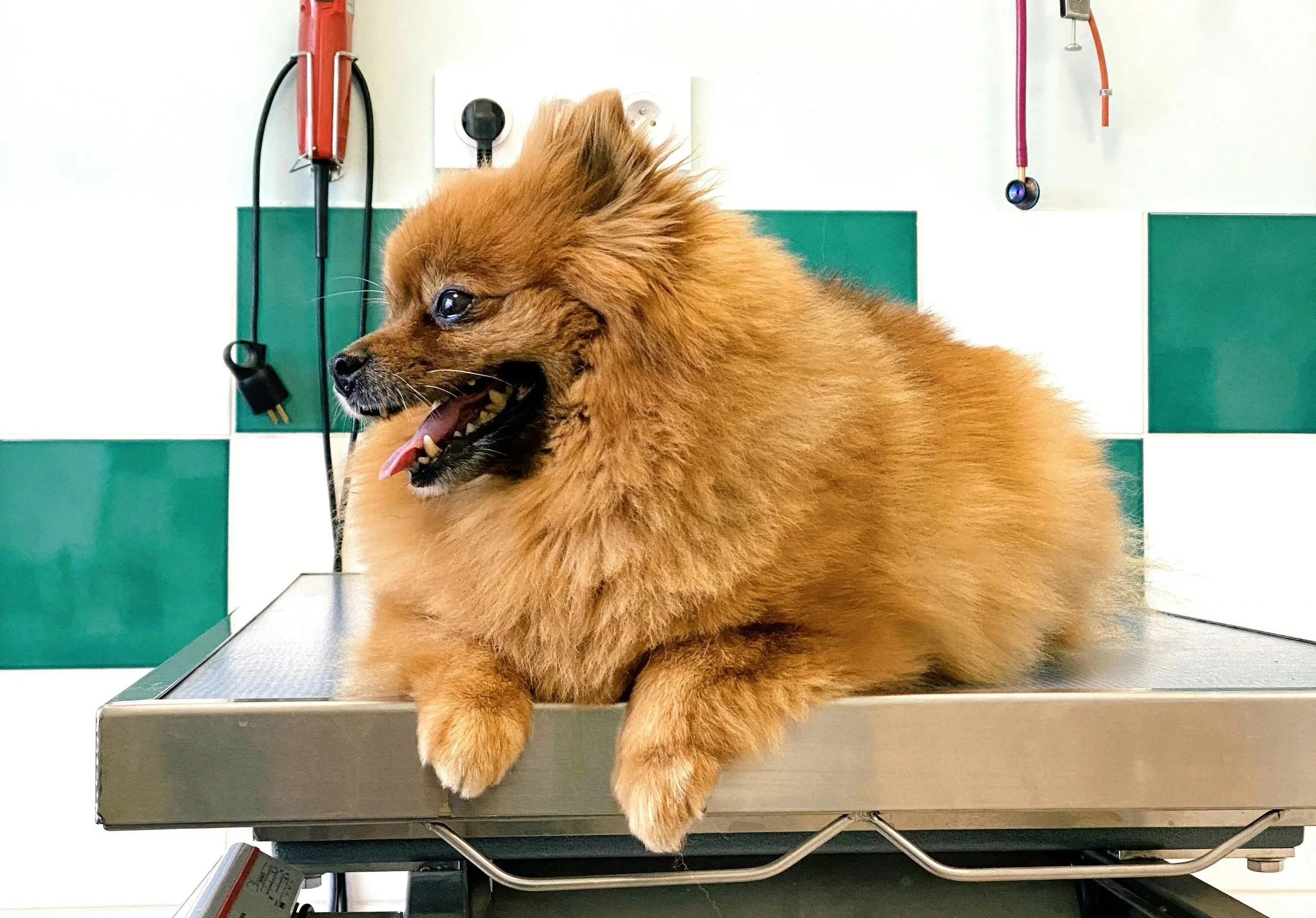
Senior dogs present their own set of considerations. A dog who starts barking at night, at walls, or at things that don't appear to be there may be showing early signs of cognitive dysfunction rather than a behavioral problem. If your older dog has started barking in ways that feel different or disconnected from their normal patterns, that conversation belongs with your vet before it belongs with a trainer.
A dog whose emotional baseline has shifted, who seems more anxious, more reactive, and harder to settle, and who isn't responding to training the way you'd expect, may also have something physical behind it. Thyroid dysfunction, for example, can look a lot like a behavior problem until bloodwork rules it out.
This step also extends beyond diagnosable medical conditions to the dog's overall state of being. A dog who is chronically under-exercised, over-stimulated, under-stimulated, or living in an environment with high baseline stress is going to have a lower threshold for barking and reactivity regardless of how well the training sessions are going.
A true LIMA-guided approach is holistic by nature. Before addressing the barking directly, it is worth taking an honest look at whether the dog's daily needs for physical activity, mental engagement, rest, and decompression are actually being met. A dog whose nervous system is already running at capacity before any trigger appears has much less left to give in the moments that matter.
Any sudden or unexplained change in your dog's barking should prompt a vet visit before you start training, managing, or drawing conclusions about what's causing it.
Before we began working with this dog, I had the owner discuss the barking with their veterinarian, including when it started, whether anything had changed around that time, and whether there were any other behavioral or physical changes worth noting. Once we had confidence that health wasn't a contributing factor, we moved forward.
If you're not sure whether what you're seeing is behavioral or medical, my free guide “Behavior Problem or Health Problem?” walks you through the signs to look for and what to bring to your veterinarian. You can find it at HeelingWithNature.com/Free-Resources.
Step Two: Antecedent Arrangement
Antecedent arrangement means modifying the environment to prevent the behavior from occurring or to set the dog up to make a different choice. For barking cases this is often the most powerful and underused tool available, and it should come before any attempt at direct behavior modification.
With this dog, we applied frosted window film to the lower panes, removing her visual access to the trigger entirely while we built the foundation. This did more than just stop the rehearsal of the behavior. It gave her nervous system the space to actually calm and reset.
A dog who has been practicing a high arousal behavior multiple times a day for two years is not operating from a regulated baseline.
The repeated exposure to the trigger, the repeated arousal spike, the barking, the temporary relief when the person moved away, and then the cycle starting again, had become her normal. Her nervous system had essentially learned to live in a state of anticipatory arousal around that window.
Removing the trigger entirely, even temporarily, allowed that pattern to begin unwinding. Without the daily rehearsal feeding the cycle, her overall arousal level around the window started to come down on its own.
This matters because learning requires a nervous system that is regulated enough to take in new information.
A dog in a state of chronic arousal around a specific trigger cannot effectively learn an alternative behavior in that same context. You can practice the alternative behavior in a calm environment and build it to a high level of fluency, but if every training session at the window is immediately preceded by or conducted alongside a spike in arousal, the new behavior doesn't have the conditions it needs to take hold.
The frosted film created a period of calm during which the foundation could actually be built rather than constantly competing with an activated nervous system.

Preventing rehearsal of a deeply reinforced behavior during this period is equally important. A behavior that has been practiced thousands of times has a strong neural pathway behind it. Every repetition of that behavior strengthens it further.
Continuing to allow that rehearsal while trying to train an alternative is working against the process, not through it. The film stopped the behavior from being practiced while simultaneously allowing the dog's baseline to settle, which meant that when we did begin introducing the alternative behaviors in that context, she was in a state where she could actually engage with the training.
This same principle applies to all types of barking:
For anxiety-based barking, antecedent arrangement might mean reducing the dog's overall exposure to triggers while their emotional state and confidence are being built, because a dog who doesn't feel safe cannot learn effectively under pressure.
For demand barking, it might mean restructuring the household routine so that the barking no longer has the same opportunity to be rehearsed and reinforced.
For threshold management in environmental or alert barking, it means working at a distance or intensity where the dog can notice the trigger without escalating, and gradually reducing that distance as their skills and emotional regulation improve.
In other barking cases antecedent arrangement might look like managing a dog's access to a fence line, changing walking routes to reduce trigger exposure while skills are being built, rearranging furniture so a dog can't access a window, adjusting a daily routine to reduce a trigger that reliably produces barking, or creating more physical and mental outlets for a dog whose barking is driven by unmet needs.
The specific arrangement depends entirely on what's behind the barking and what the dog's environment looks like, which is why assessment always comes before intervention.
Step Three: Positive Reinforcement
With the environment managed, we focused on teaching what we actually wanted her to do. The primary behavior was to come find her owner when she saw or heard someone passing the window. This physically pulled her away from the trigger and was heavily reinforced when she did it.
We also taught a place behavior she could be sent to when needed, rewarded with something to settle with on place. Both behaviors were put on cue and practiced until they were solid and accessible, because a behavior the dog doesn't know well enough to offer under mild arousal is not ready to compete with a behavior that has two years of reinforcement history behind it.
For anxiety-based barking, this step centers on the emotional state as much as the specific behavior being taught. A dog who doesn't feel safe cannot reliably access learned behaviors under pressure, which means the reinforcement work at this stage has to prioritize building confidence and reducing arousal alongside teaching the alternative behavior itself.
The behaviors being reinforced should reflect that: orienting to the handler, offering calm, choosing to disengage from a trigger rather than react to it. The goal is a dog who has both the skill and the emotional regulation to use it when it counts.
For barking cases generally, the specific alternative behavior depends on the dog, the type of barking, and what makes sense for that household. What matters is that it's practiced enough, reinforced enough, and accessible enough to be a genuine option when the trigger appears, not just something the dog can do in a quiet room with no competing history behind it.
Step Four: Differential Reinforcement
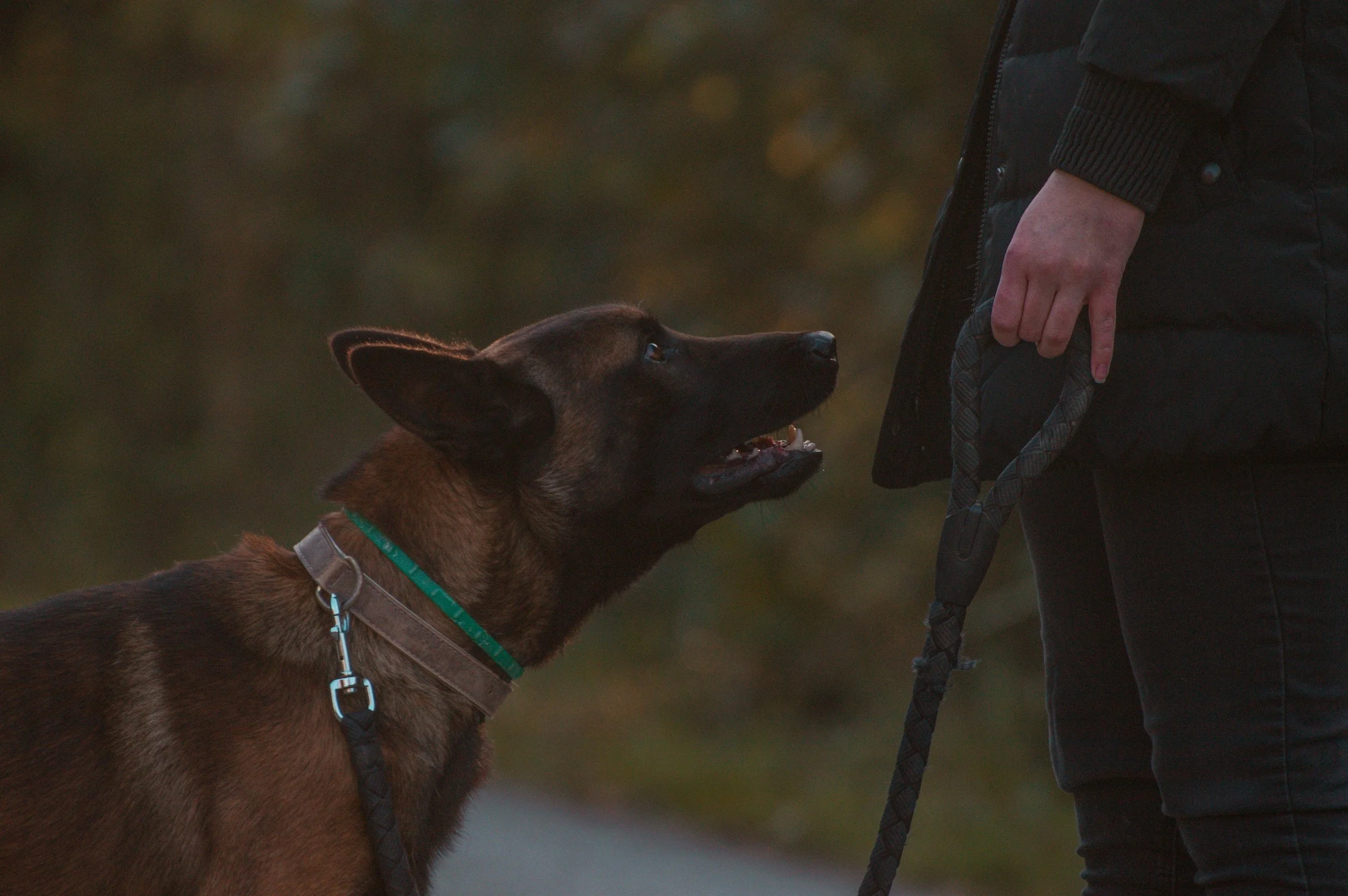
Once those behaviors were reliable, we began asking for them in exchange for the barking. When she started to alert at the window, we cued her to come find her owner or go to place. She could not physically be at the window barking and simultaneously be coming toward her owner or settling on place.
The alternative behavior became the currency, consistently reinforced, consistently practiced, until it began to replace the barking as her default response to someone passing outside.
Differential reinforcement in barking cases works by making the alternative behavior more reinforcing and more practiced than the barking over time. For demand barking specifically, this step requires close attention to consistency across everyone in the household, because the dog is always learning from every interaction.
If one person cues the alternative and reinforces it reliably while another responds to the barking with attention or lets it continue without redirecting, the differential reinforcement loses its effect. The dog learns to read which person is which and adjusts accordingly.
Intermittent reinforcement, even unintentional, makes behaviors more persistent rather than less, which is why a demand barker whose barking occasionally gets a response will often bark harder and longer before giving up than one whose barking has never worked at all.
Step Five: Extinction
In the early stages of training the new behavior, she would sometimes come toward her owner while still barking. We withheld the treat until she was quiet, which meant the barking component of the behavior stopped producing the expected reinforcer.
Over time the barking extinguished from the response because it was no longer part of what worked. Coming quietly was what got reinforced. Coming while barking did not produce the same result, and the behavior shaped accordingly.
Extinction in barking cases can take different forms depending on what has been maintaining the behavior. If the barking has been reinforced by attention, removing that attention consistently is part of the extinction process. If it has been reinforced by the trigger moving away, as it was with this dog, the work involves changing what the dog does before the trigger disappears so that the barking is no longer the behavior that precedes the relief.
Extinction is rarely comfortable in the short term. Behavior often intensifies before it improves when reinforcement is removed, which is known as an extinction burst. Understanding that this is a normal part of the process helps owners stay consistent rather than giving in at the point where the behavior temporarily escalates.

Step Six: Positive Punishment
Once the frosted film came off, we introduced a simple "no" when the barking started, followed immediately by the cue for the alternative behavior. A well-timed interruption at this stage serves to disrupt the rehearsal of the behavior and redirect the dog toward something that has been built, reinforced, and practiced enough to be genuinely accessible.
Occasionally physically removing her from the window was necessary in the early stages of working without the film, but by the time the reinforcement history for the alternative behavior was strong, it rarely came to that.
When positive punishment is considered in barking cases, the standards that matter are timing, clarity, fairness, and proportionality. The dog needs to understand what is being asked of them, have a clear and well-reinforced alternative available, and have the emotional regulation to access that alternative under arousal.
The intervention itself needs to be proportionate to the behavior and the dog, not reflexive or frustration-driven. When those conditions are met, a correction can be a meaningful part of the process.
When they aren't, it tends to suppress the behavior temporarily while the underlying cause continues unaddressed, and in dogs barking out of fear or anxiety, it can intensify the emotional state fueling the behavior rather than reducing it, which is the opposite of what the situation requires.
That distinction is not a philosophical one but a practical one, and it shapes the outcome in ways that matter long after the session is over.

The Humane Hierarchy isn't a rigid checklist and it doesn't look identical in every case. Some dogs move through the early steps quickly. Others need more time at antecedent arrangement before they're ready to engage with anything else.
The framework is a guide for decision-making, not a guarantee of a specific timeline. What it does guarantee is that each step is considered and genuinely worked through before moving to the next, which is what separates a training plan that addresses the behavior from one that simply suppresses it.
A dog who is quieter because they've been corrected into silence and a dog who is quieter because they have the skills, the reinforcement history, and the emotional regulation to choose a different response are not the same dog, and the difference matters in the long run.
Common Mistakes That Make It Worse
Understanding the framework is one part of the picture. Equally important is knowing what tends to get in the way of progress, whether through well-meaning responses that inadvertently reinforce the behavior, or through approaches that address the symptom without touching the cause.
Yelling at a barking dog. To a dog who is already activated, a human yelling sounds like joining in rather than a correction. It adds energy to an already aroused state, and some dogs actually escalate when owners raise their voice because they read it as excitement or confirmation that something in the environment is genuinely worth reacting to.
Punishing anxiety-based barking without addressing the anxiety. A dog who is frightened and gets corrected for expressing that fear doesn't become less frightened. They become a dog who is frightened and no longer able to communicate it. The emotional driver is still there, it's just been pushed below the surface, which makes it harder to see and harder to work with over time.
Using suppression tools without understanding the behavior. A bark collar that fires every time the dog vocalizes doesn't teach the dog anything about why they shouldn't bark, it just punishes the bark. For a dog barking out of anxiety or pain, this approach causes real harm. Tools of any kind require a clear understanding of the source of the behavior before they're considered, and even within a structured training plan, they're not the starting point.
Giving attention when they bark and then wondering why they keep barking. This one is hard because it feels unkind to ignore a barking dog, but if the barking is demand-based, attention feeds it, including negative attention. A dog who gets a verbal response, eye contact, or any kind of reaction when they bark has received a reinforcer, regardless of whether the owner intended it that way.
Assuming all barking is the same. A dog who barks out of prey drive needs a completely different approach than a dog who barks out of separation anxiety. A breed-driven vocalizer is not the same as a dog who has learned that barking gets them what they want. Treating all barking the same way is how owners end up frustrated after months of trying approaches that work for a different type of barking than the one their dog is actually doing, which is exactly why identifying the type comes before deciding on the response.
Waiting it out without changing anything. If the barking has been happening for months or years and nothing has shifted, it won't resolve on its own. The behavior has a history and a function, and without identifying and addressing the cause, the pattern will continue regardless of how long the owner waits.

What You Can Do Right Now
Start by observing. Notice when the barking happens, what triggered it, how long it lasted, and how your dog looked before, during, and after. Was there tension in the body before it started? Did they settle quickly or stay activated? Did anything make it better or worse? Most owners have more information than they realize once they start paying attention to the details, and that information is what shapes everything that comes next.
If the barking has been building over time, or if it's starting to feel unmanageable, a behavior assessment gives you a clear and honest picture of what's actually at the root of it and a structured path forward built around that specific dog in that specific environment. Barking is one of the most common things owners struggle with and one of the most misunderstood, but it almost always makes sense once you understand the dog well enough to see it. If you're ready to get started, you can book a free 15-minute consultation directly at HeelingWithNature.com/Schedule.
This post is the first in an ongoing series called “Ask Tuesday”. Each Tuesday, I select one question to answer publicly. Some answers are brief, some go deep, depending on what the question calls for. If something in this post raised a question about your own dog, or if there's something you've been trying to figure out for a while, please submit it. The answer might help more people than you expect.
Tues ☺️🐾🌿
Heeling with Nature serves clients in person throughout Connecticut and surrounding areas.
Virtual behavior assessments and consultations are available to owners anywhere.