Why Does My Dog Bark and Lunge on Leash?
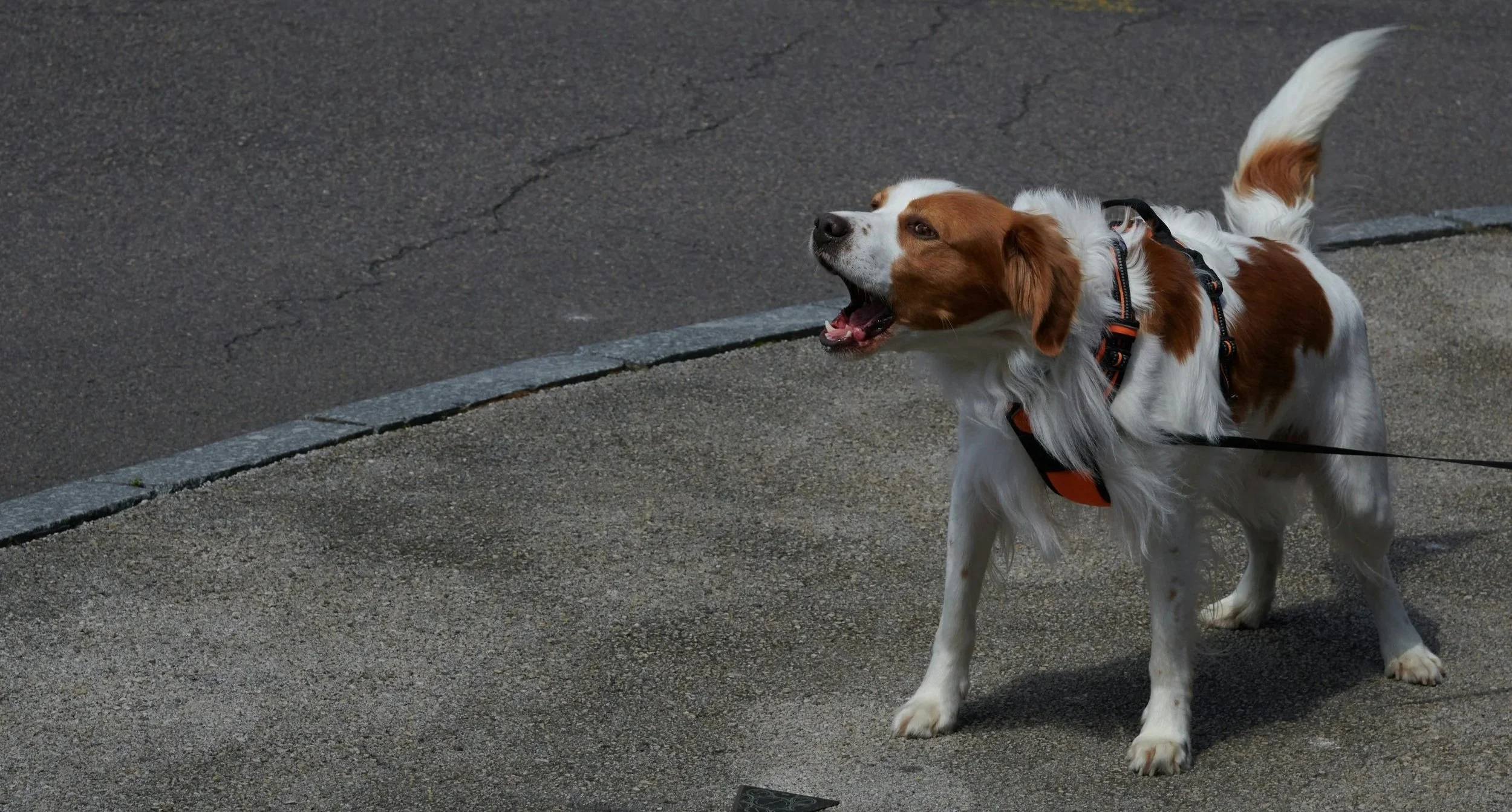
If you have a dog who barks, lunges, growls, or spins at the end of the leash when they see another dog or person, you are not alone. This is one of the most common behavior issues owners contact me about, and it is almost always described the same way: "I think my dog is aggressive."
Sometimes that is true. Aggressive displays should always be taken seriously, and a dog who has a bite history, has made contact, or whose behavior feels qualitatively different from frustration or overwhelm warrants a professional behavior assessment before anything else.
What most owners are seeing, though, is a behavior pattern commonly referred to as reactivity. Reactivity describes a dog whose response to certain triggers is disproportionate, fast, and difficult to interrupt, and whose behavior on leash includes some combination of barking, lunging, growling, spinning, or fixating on whatever has set them off.
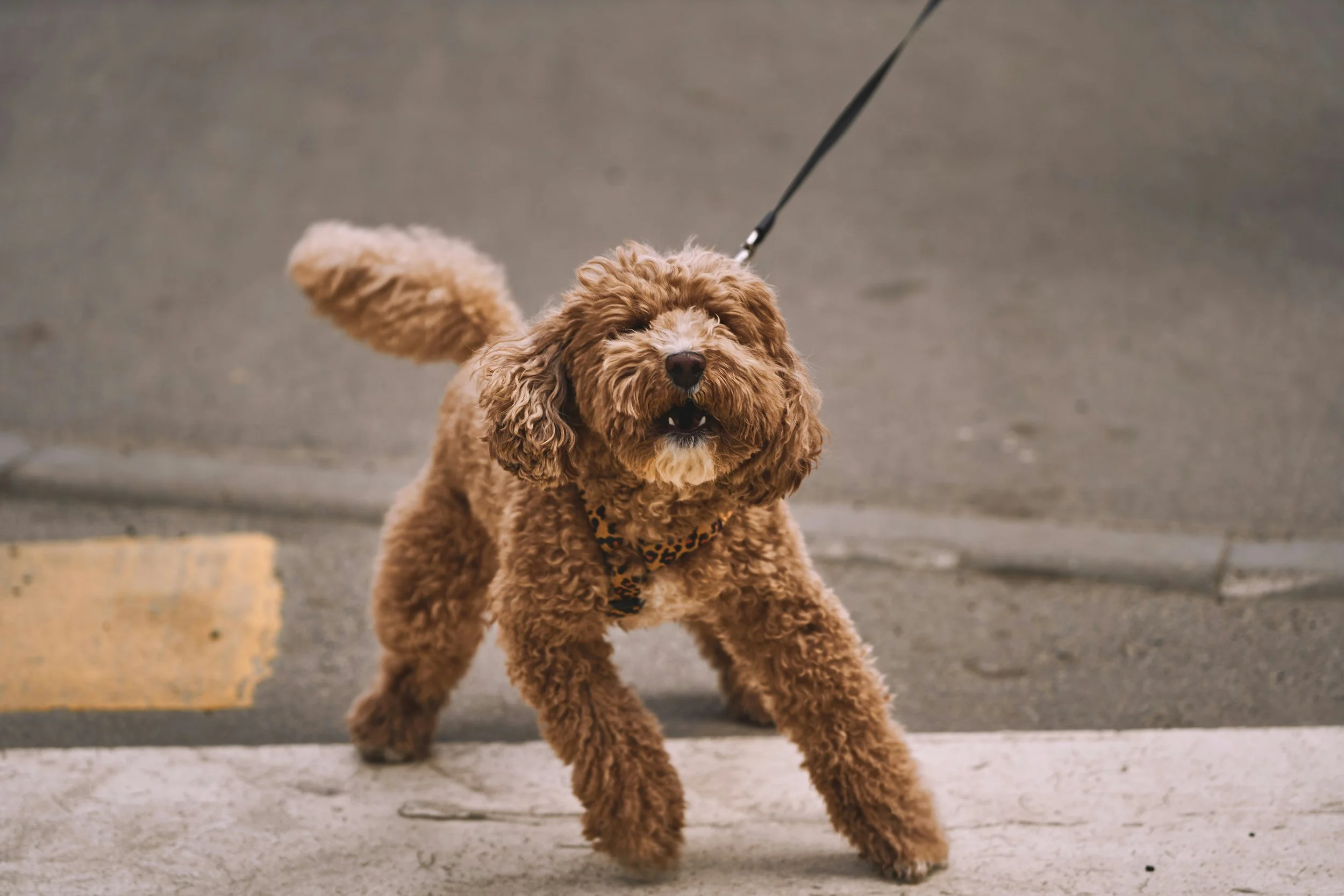
This post focuses specifically on leash reactivity toward dogs and people, which is the most common presentation. Reactivity can also occur behind barriers like fences, windows, and cars, toward specific stimuli like bikes or skateboards, and in some dogs off leash as well. Those presentations share some underlying principles but have enough distinct components to warrant their own discussions.
A reactive dog is not necessarily an aggressive dog, but reactivity is communication of internal state that is not socially functional in that context. A dog who is over-aroused and reacting is not in a state where they can read another dog's signals or respond to them in a way the other dog can safely interpret.
The receiving dog responds to what the reactive dog is doing, and an over-aroused approach accompanied by barking and lunging is one the other dog is likely to respond to defensively. That dynamic significantly increases the likelihood of a conflict regardless of what the reactive dog was doing it for.
Understanding what is actually driving the behavior is the starting point for everything that follows. And in most cases, it starts long before the walk.
Before You Dive In
Most dogs who bark and lunge on leash are not aggressive. Reactivity is most commonly driven by frustration, fear, or predatory drive rather than intent to harm, and the distinction matters enormously for how it needs to be addressed.
The leash removes a dog's normal coping options and can significantly intensify emotional responses. Handler tension travels down the leash and contributes more than most owners realize.
Successful training starts with ruling out medical causes, managing the environment to stop rehearsal, and building a foundation of engagement and skills before any trigger work begins. Equipment alone does not fix reactivity.
Understanding why your dog is reacting is where everything else begins.
The Socialization Myth
The word socialization gets used constantly in dog training and almost always incorrectly. Most owners understand it to mean exposure, and they act on that understanding by letting their puppy pull toward every dog and person they encounter, arranging on-leash greetings with strangers, and bringing their dog into busy and overwhelming environments as often as possible.
Socialization does involve exposure, but exposure alone is not socialization. True socialization means building neutral, positive, and manageable associations with the world through controlled, low-pressure experiences where the dog has the opportunity to process what they are encountering without becoming overwhelmed.
The goal of socialization is neutrality, not enthusiasm. A dog who can pass another dog on the street without reacting is more socialized than a dog who strains at the leash desperate to get there.
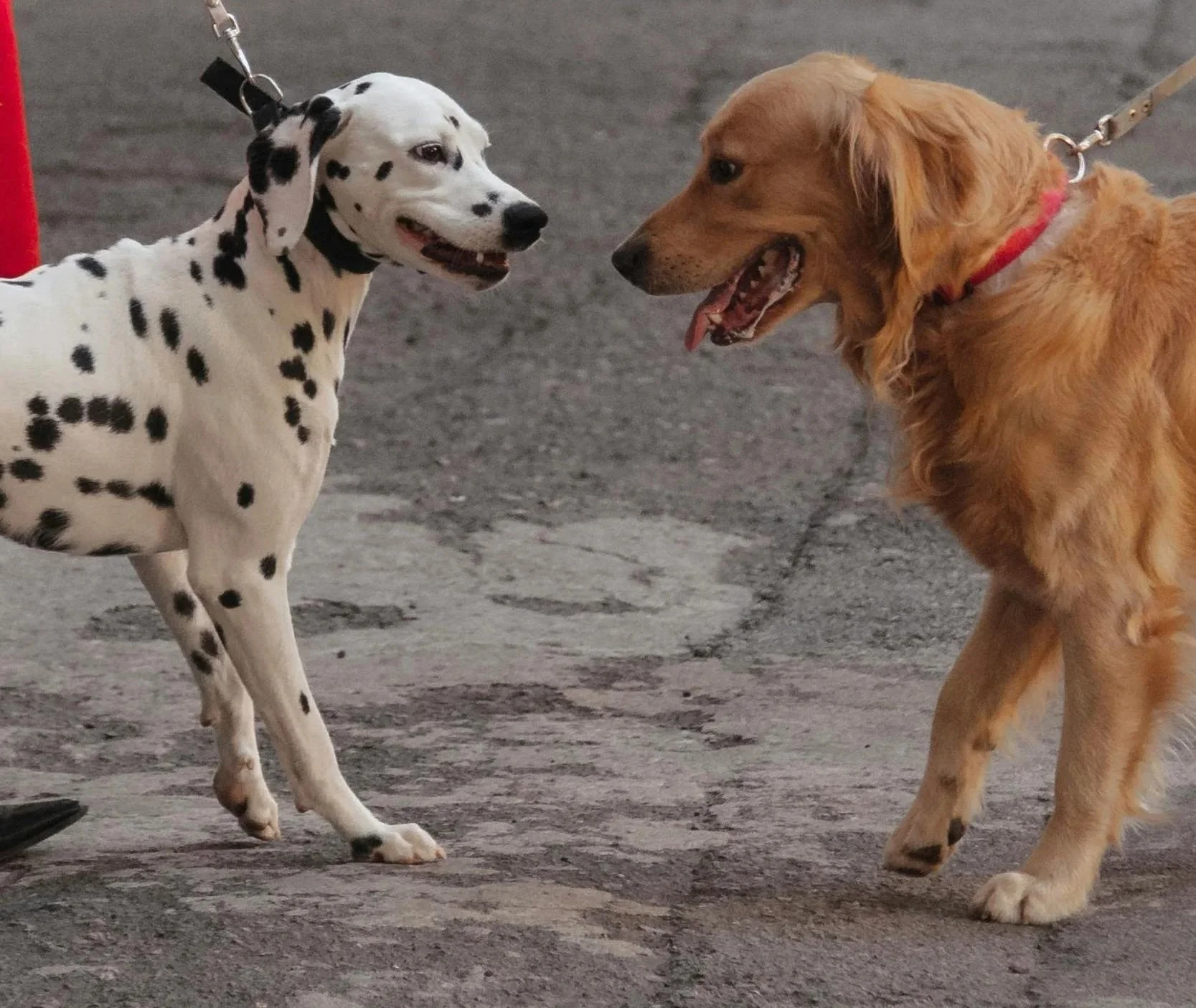
When puppies are flooded with uncontrolled on-leash greetings and overwhelming environments from an early age, what they actually learn is that every approaching dog or person is an event worth becoming activated about. Some dogs learn to anticipate those greetings with excitement that eventually tips into frustration when they cannot get there fast enough. Others learn to feel overwhelmed or unsafe and begin reacting defensively.
In both cases the behavior becomes rehearsed, and rehearsed behavior becomes the default. By the time owners notice the problem the pattern is often already well established. In my experience this is one of the most common things I see in first consultations. The owner describes what they thought was a well-socialized puppy, and what they actually describe is a puppy who was flooded repeatedly before they had any of the skills to handle it.

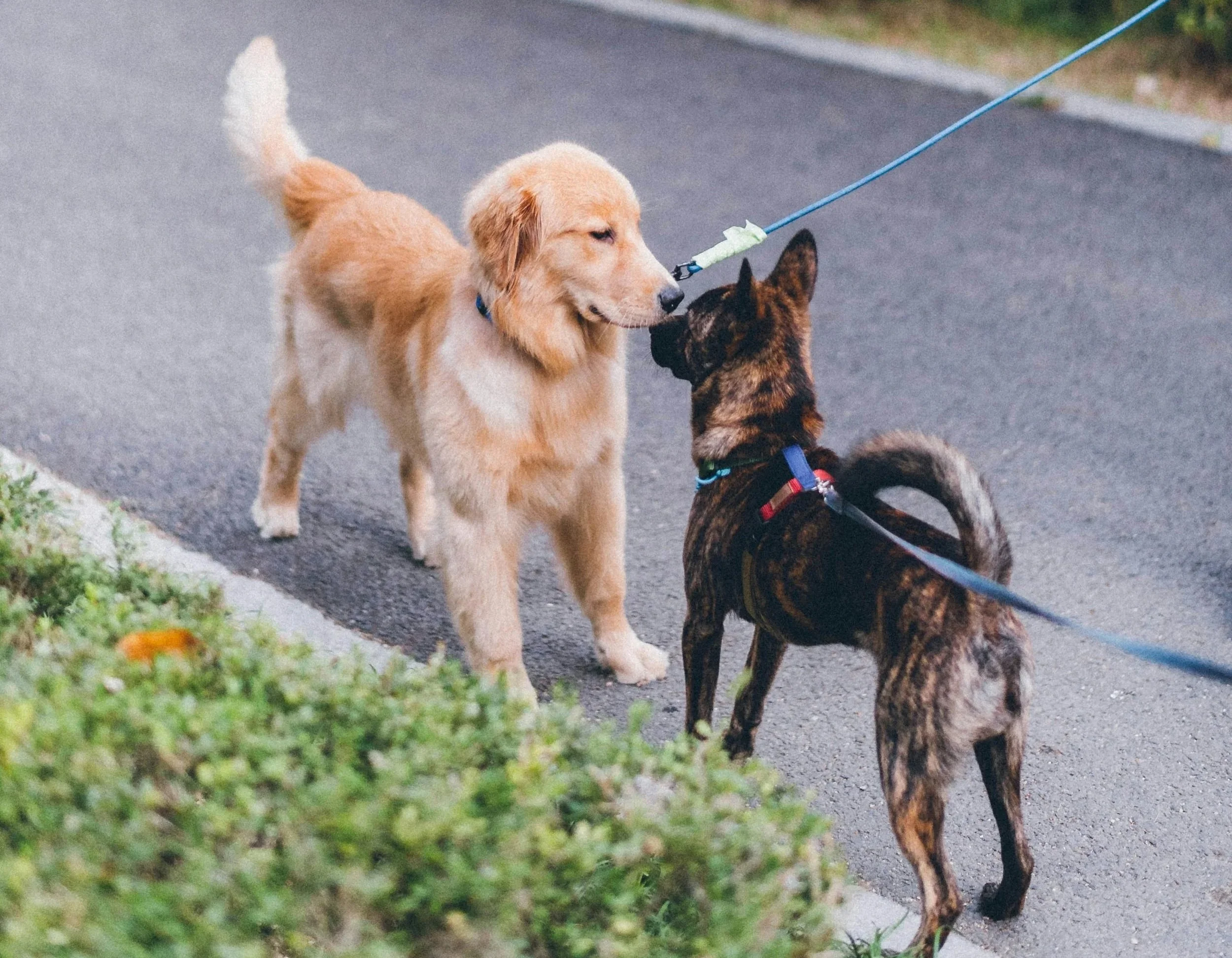
Most strange dogs do not need to meet, and almost none of them need to meet on leash. The on-leash greeting is an unnatural social situation that removes a dog's ability to communicate normally, approach at their own pace, and disengage when they have had enough. The dogs who react on leash have often simply had enough of being put in that position repeatedly without the skills to handle it.
Why the Leash Changes Everything
A dog off leash in open space has options. They can approach, disengage, create distance, sniff the ground, turn away, and move at their own pace. These are all normal canine behaviors that serve real communicative functions.
On leash, most of those options disappear. The dog cannot create distance when something feels like too much, cannot disengage cleanly, and cannot move at their own pace.
They are also tethered to a handler who may be tense, pulling back on the leash, or inadvertently communicating their own anxiety through leash pressure. Handler tension communicates directly to the dog, often before the trigger is even close enough to matter.
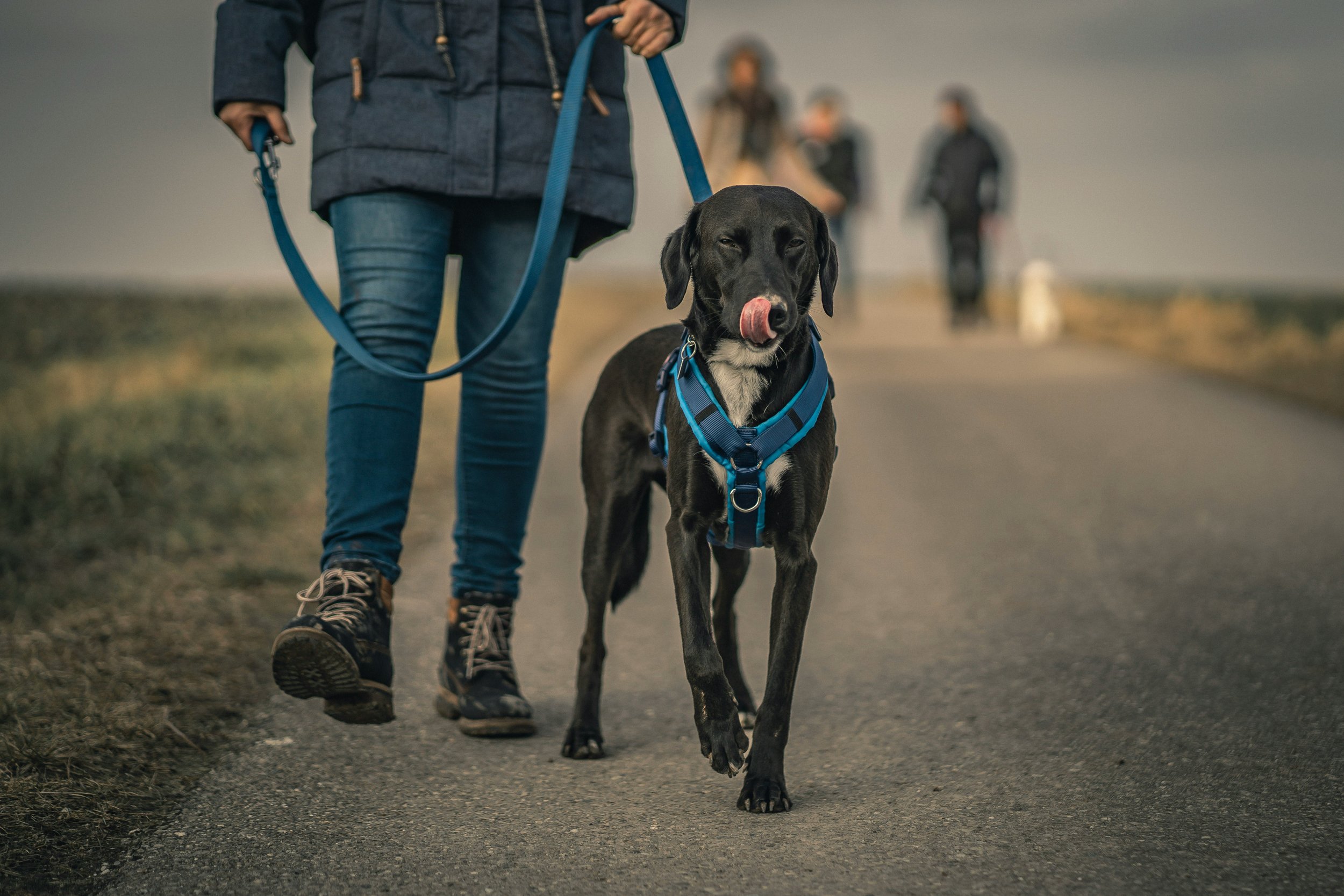
A handler who tightens up when they see another dog approaching, shortens the leash, holds their breath, or braces for impact is sending a clear signal that something concerning is about to happen. Over time many dogs begin reacting to their handler's anticipatory tension before they even see the other dog. I can usually tell within the first few minutes of watching a handler and dog walk together whether the handler's body is contributing to the reaction, and it more often than not is.
This is also why the same dog can appear dramatically different on leash versus off leash. On leash the dog loses the options they would normally use to manage their own stress, and in most cases nobody replaced those options with anything trained.
In almost every first session I find that the dog has been managed on leash for years without ever being taught what to actually do there. The leash becomes a crisis tool rather than a communication tool, and the dog has been left to figure out the rest on their own.
What Is Actually Driving the Behavior
Not all leash reactivity looks the same or comes from the same place. Understanding what is underneath it matters because it shapes everything about the approach.
Most dogs do not present with clean, single-category motivation. Fear, frustration, and predatory drive can all overlap, and many reactive dogs show elements of more than one depending on the trigger, the context, and where they are in their arousal cycle.
The categories below are useful for assessment and communication, but real cases are often messier than any framework suggests.
Frustration-Based Reactivity
This is the presentation I see most often and one of the most commonly misread as aggression. The dog pulls hard toward other dogs or people, barking, lunging, spinning, and the body language is intense but often includes loose and wiggly elements alongside the arousal. The tail may be up and wagging. The dog may be vocalizing in a way that sounds more like excitement than distress. This is a dog who wants to get there, not a dog who wants to cause harm, and that distinction matters for how the behavior is addressed.
What distinguishes frustration-based reactivity from predatory reactivity, which can look similar on the surface, is the target and the quality of the fixation. A frustrated dog is typically reacting to dogs or people and has a social component to what they want. A dog in prey drive is locked onto something as a target in a fundamentally different way. The frustrated dog wants access. The predatory dog wants to chase or catch.
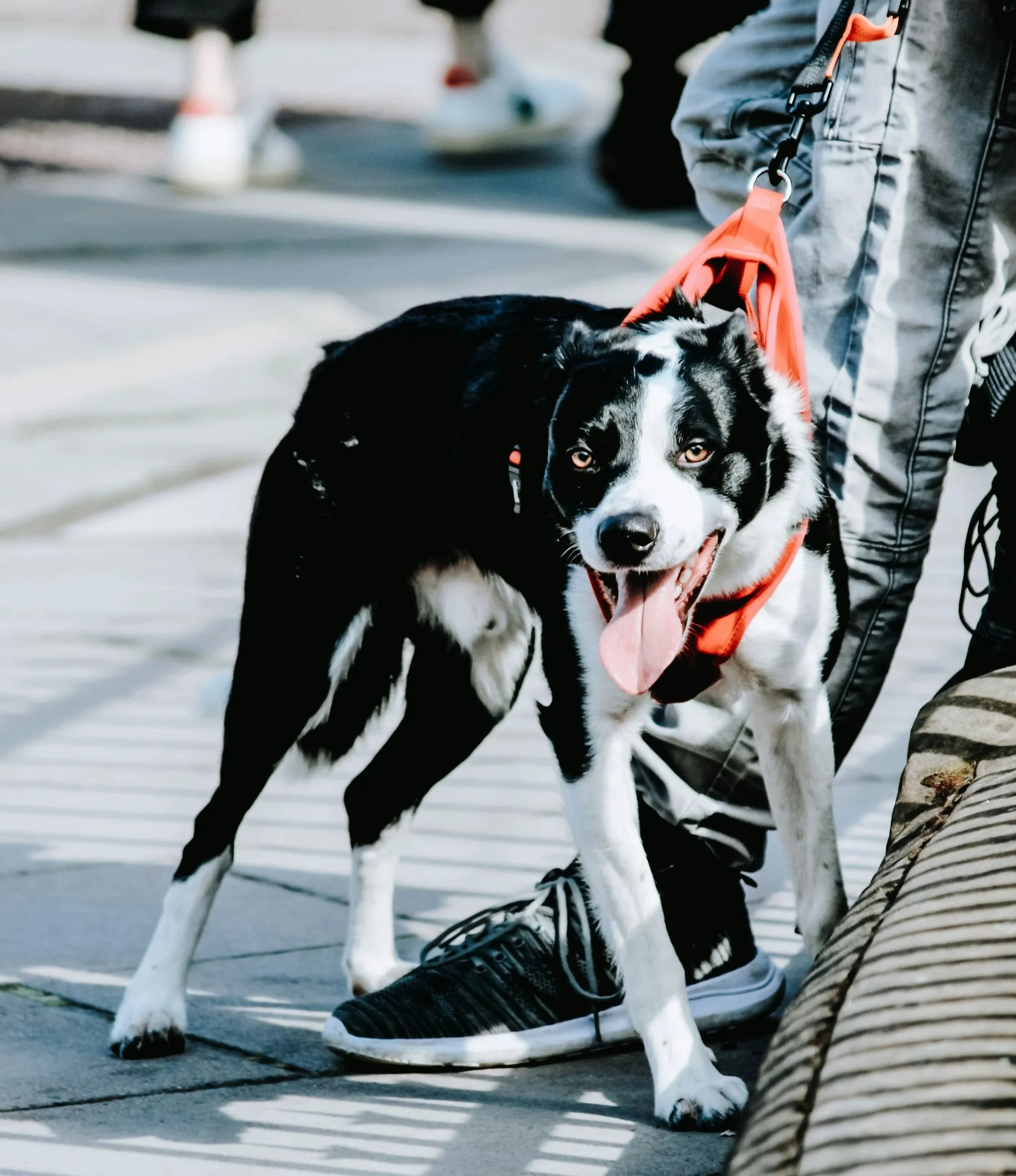
Frustration-based reactivity often develops from early learning history or reinforcement patterns, including dogs who learned early that pulling and reacting eventually produced access to what they wanted. Some dogs, particularly working breeds and high drive dogs, also have a significant arousal component where the leash prevents them from acting on an activated drive state and the resulting frustration overflows into barking and lunging. In all of these cases the mechanism is the same: the dog is frustrated by what the leash prevents, and the reaction is the outlet for that frustration.
Over time frustration-based reactivity tends to intensify if it goes unaddressed. The behavior is rehearsed and reinforced on every walk, the dog's threshold lowers as the pattern becomes more established, and what began as a specific emotional response can start to function almost on autopilot, firing before the dog has fully processed what they are reacting to.
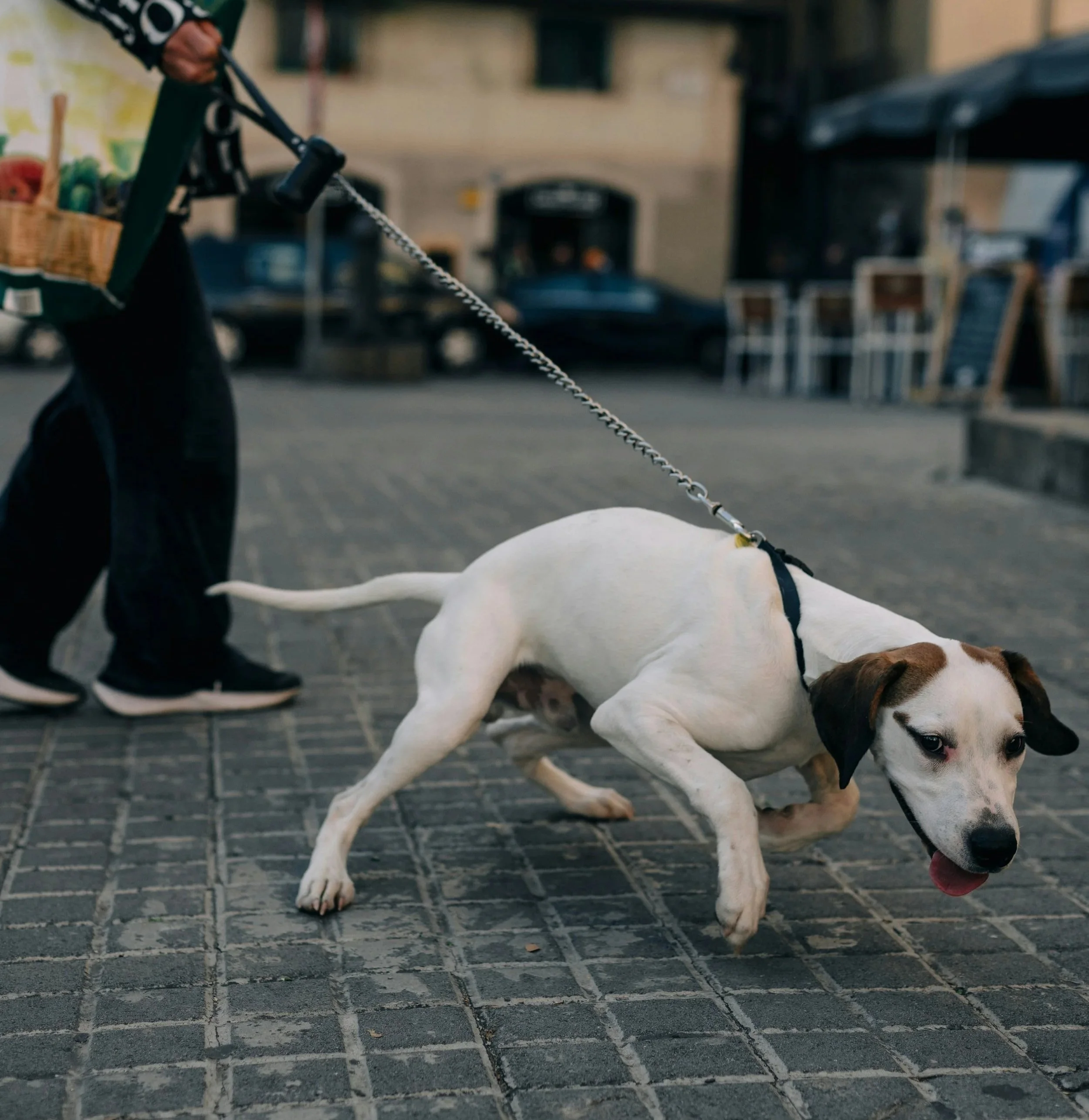
A dog who once reacted only when another dog was nearby may eventually begin reacting the moment they spot one across the street. A dog who once recovered quickly may take longer to regulate. The behavior develops its own momentum independent of whatever originally started it, which is one of the reasons early intervention matters and one of the reasons long-standing reactivity is more complex to work through than reactivity that is caught and addressed early.
Dogs who are manageable on their own sometimes become reactive when walked alongside another dog from the same household.
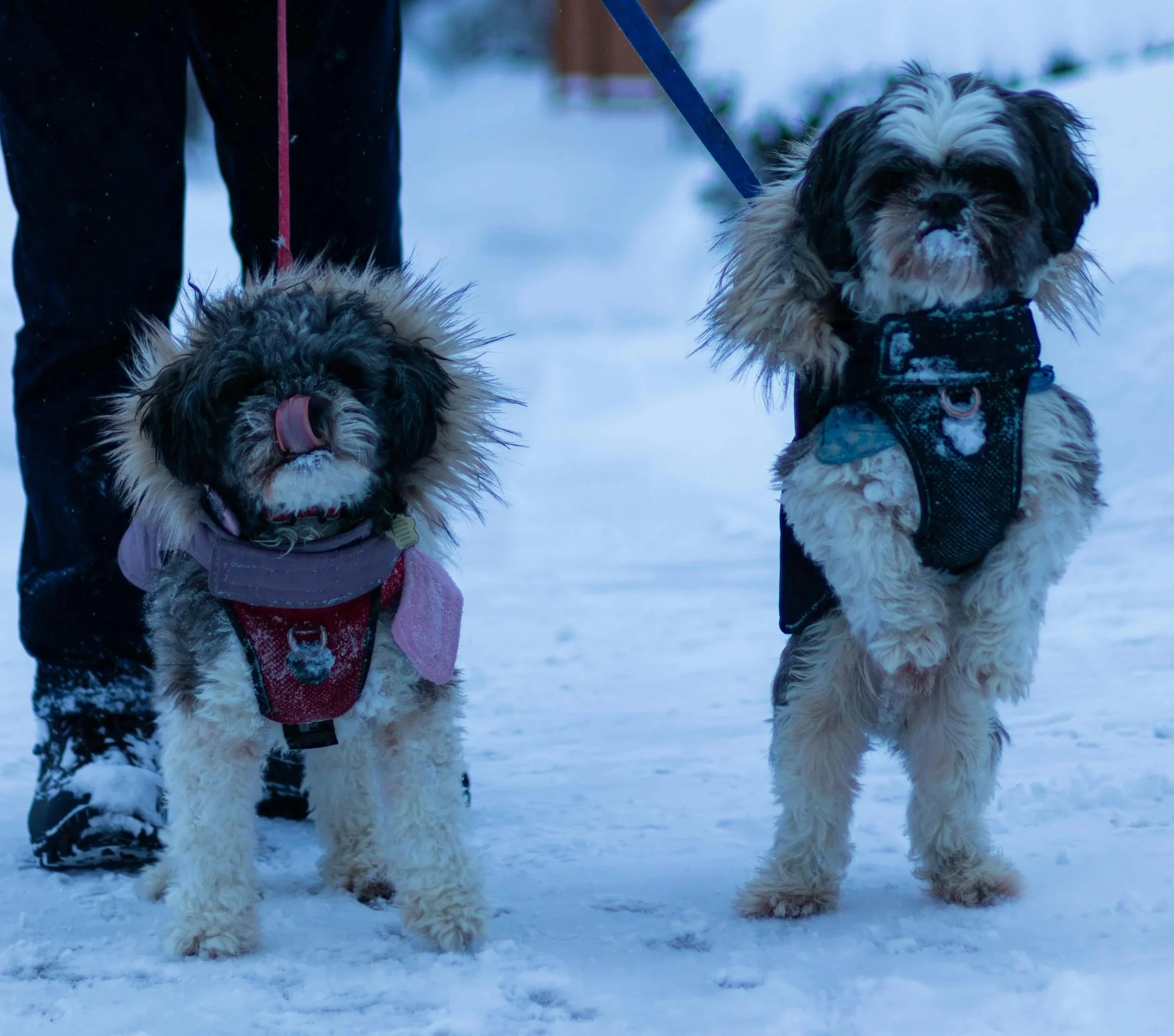
Having a companion can create boldness the dog would not have alone, the arousal of two dogs walking together compounds quickly even before any trigger appears, and one dog reacting to something can trigger the second before the handler has time to intervene. Managing this dynamic requires managing each dog's arousal level independently, not just addressing the one who reacted first.
Fear-Based Reactivity
Fear-based reactivity does not always look the way people expect. Some fearful dogs do try to create distance, barking and lunging to push the trigger away. Others, particularly dogs whose flight response is suppressed by genetics or prior conditioning, will move forward even when fear is the primary driver. The behavior can look identical to frustration-based reactivity on the surface, which is one of the reasons accurate assessment matters before any training plan is put in place.
The body language is often the clearest indicator of what is actually happening underneath. A tucked tail, whale eye, ears back, or a body that is trying to look bigger while simultaneously leaning or pulling away points toward fear even when the dog is moving forward. These dogs are communicating that they feel unsafe, and the reaction is the only tool they have left to manage that feeling.

What makes fear-based reactivity particularly important to identify correctly is what happens when it is mishandled. A dog who is reacting out of genuine fear and receives a correction for that reaction does not become less afraid. They become a dog who is afraid and no longer able to communicate it, which makes the underlying emotional state harder to read, harder to address, and over time more likely to escalate into something that looks less like reactivity and more like aggression. Suppressing the behavior without addressing what is underneath it does not resolve the fear. It removes the warning signal while leaving the emotional driver completely intact.
This is one of the presentations I see most commonly mishandled, because the intensity of the behavior leads people to respond to it as aggression when what the dog actually needs is a completely different approach. Fear-based reactivity often has roots in inadequate socialization, a traumatic experience, genetics, or a combination of all three. It tends to be more complex to work through because the emotional foundation is one of genuine distress, and the work has to address that foundation alongside the behavior itself or the changes will not last.
Predatory Reactivity
Predatory reactivity is one of the most frequently misidentified presentations because it can look like frustration or arousal on the surface but is driven by something fundamentally different. This is not a dog who is overwhelmed, frustrated by the leash, or reacting out of fear. This is a dog who has locked onto something as prey and whose entire nervous system is organized around that fixation.
The triggers are typically fast moving, small, or both. Squirrels, birds, cats, joggers, cyclists, skateboarders, small dogs. The behavior often has a different quality to it than fear or frustration based reactivity. There is intense focus, a stillness or stalking quality before the lunge, and a drive that feels qualitatively different from a dog who is barking out of distress or wanting to get to another dog to play. The dog is not communicating distress. They are not asking a question. They are locked on.
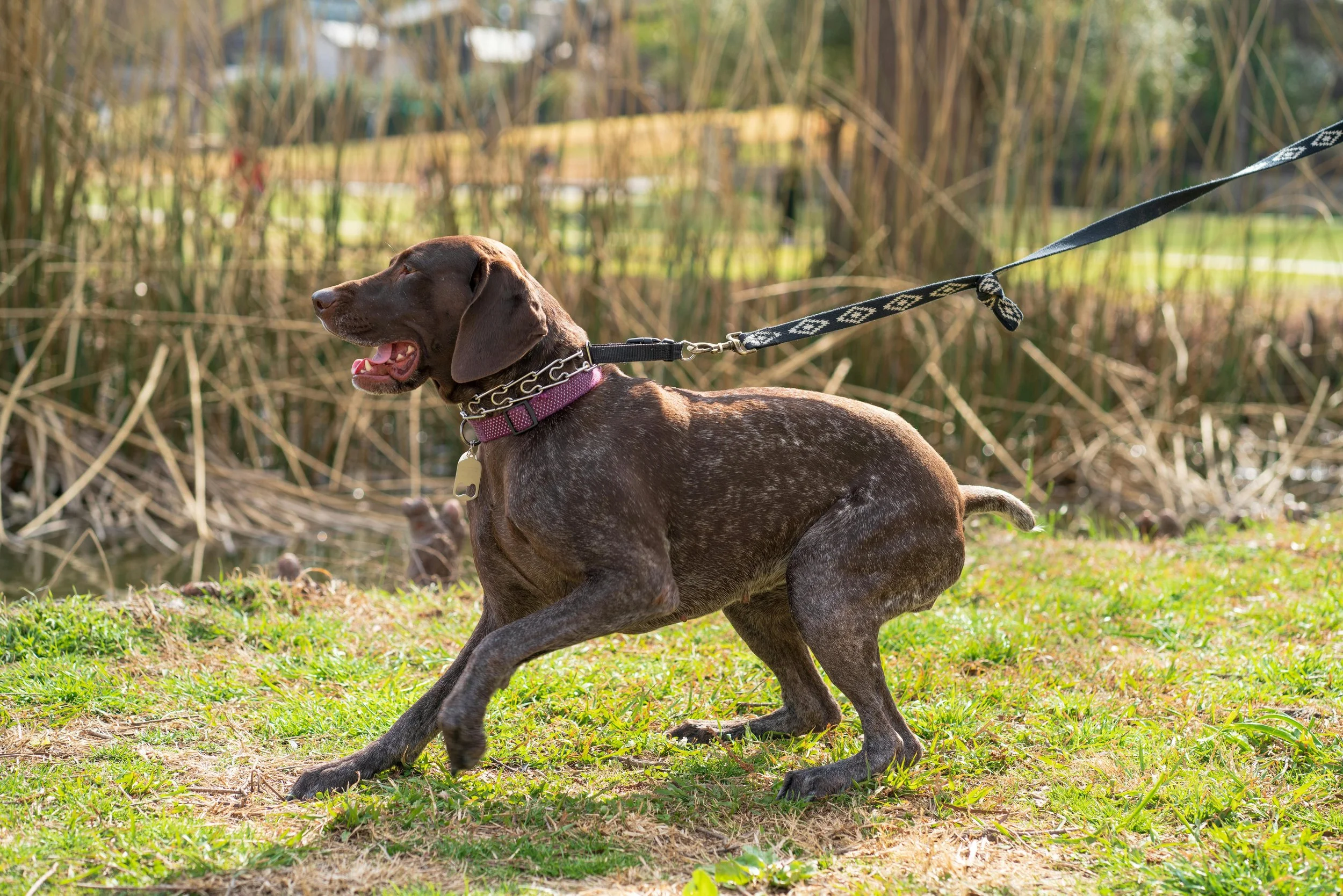
This distinction matters enormously for how the behavior is approached. The tools and timing that work for a dog reacting out of fear are not the same ones that work for a dog in active prey drive. Applying a fear or anxiety based approach to a predatory dog will not produce meaningful change because the emotional state and the mechanism driving the behavior are fundamentally different. These dogs are activated, and the work involves managing that activation and building reliable interruption behaviors, not addressing an underlying emotional wound.
Predatory reactivity also carries a specific safety consideration that the other types do not. A dog in active prey drive who gets loose or whose handler loses control of the leash is not in a state where recall or redirection is reliably accessible. The pull of the prey drive can override trained behaviors that are solid in every other context, which is one of the strongest arguments for solid leash skills, below threshold management, and muzzle conditioning in dogs with significant prey drive.
When It Is More Than Reactivity
Some dogs are displaying genuine aggressive intent, and while that can look similar to other types of reactivity on the surface, the distinction matters significantly for safety. If your dog has a bite history, has made contact, or displays behavior that feels different in quality from frustration or overwhelm, that warrants a professional assessment before anything else.
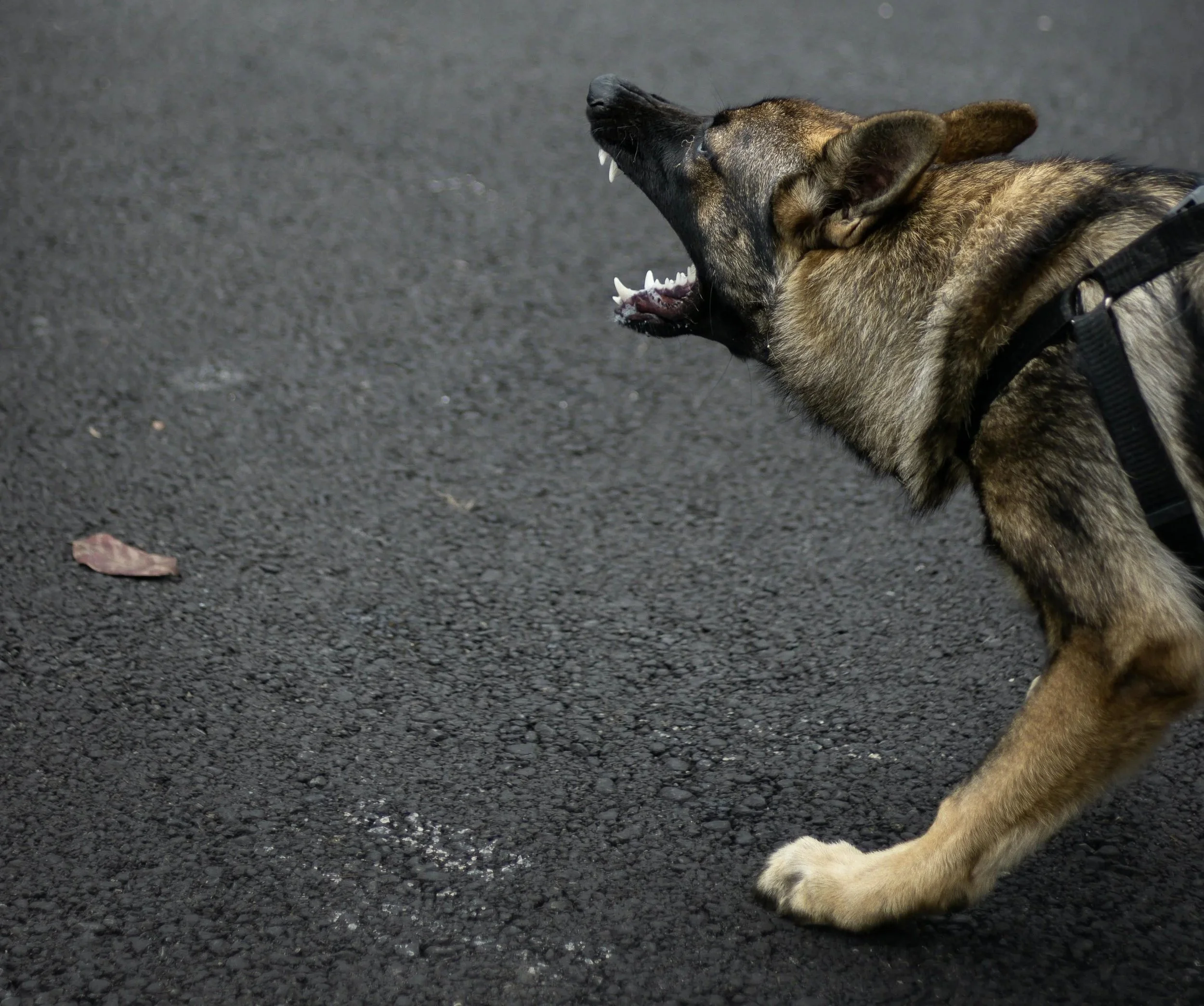
It is also important to understand redirection in this context. When a handler physically interrupts a dog mid-reaction, the dog whose arousal is already elevated and who cannot reach their trigger may redirect that arousal onto the nearest available target, which is often the handler's hand or arm. This is not aggression toward the handler in the traditional sense, but it is a serious safety issue, and it is one of the reasons that physically intervening in a reactive episode without the right skills and timing can go wrong quickly. Understanding how to interrupt a reaction safely is part of what you learn when working with a professional, not something to improvise in the middle of a reactive episode.
If your dog is displaying aggressive behavior, please seek professional support rather than attempting to manage this alone.
A Note on Muzzle Conditioning
If your dog is working through leash reactivity, muzzle conditioning is worth starting now rather than waiting for an incident to make it feel urgent. A well-conditioned muzzle is not a punishment. It is a safety tool that protects other dogs, people, and your own dog from the consequences of a moment where the behavior goes further than expected.
Reactive dogs are more likely to find themselves in situations where a muzzle matters, whether that is a surprise encounter on a walk, a setback during training, or a veterinary visit where their stress level is already elevated. A dog who has never worn a muzzle and suddenly needs one is a dog who has one more stressor added to an already difficult moment. A dog who is comfortable wearing one can be kept safe without that added layer of conflict.
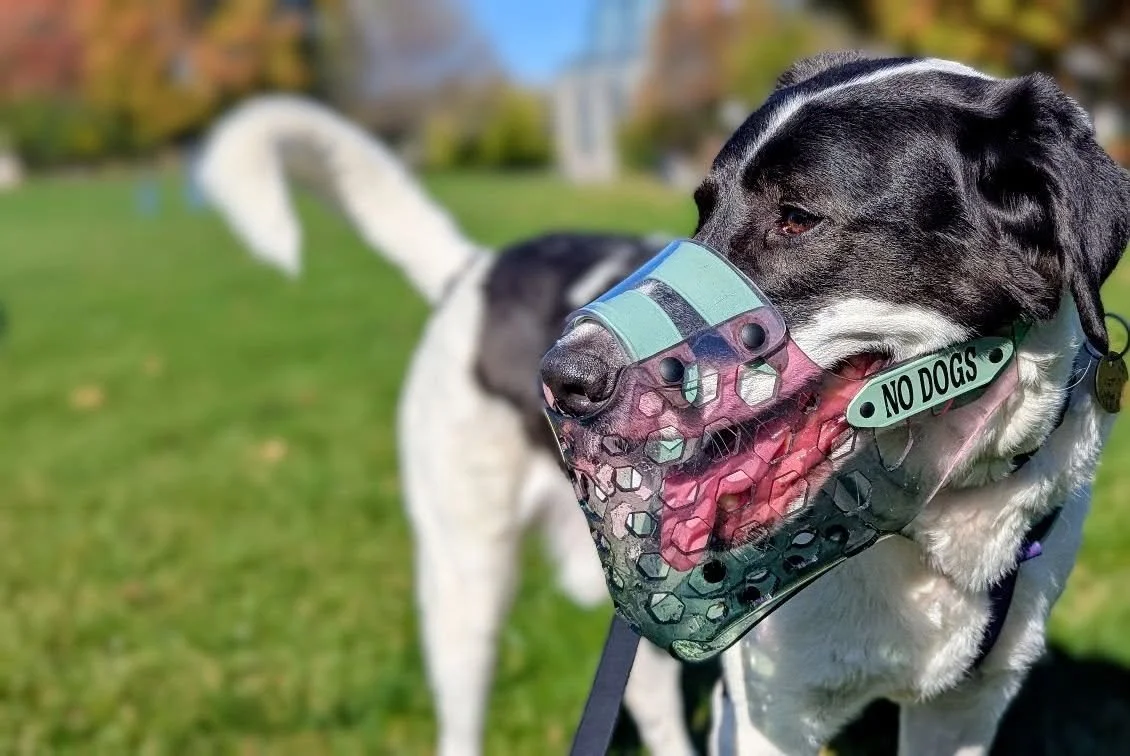
Photo courtesy of Mia's Muzzles. Custom fit basket muzzles handmade in Canada. MiasMuzzles.com
Not all muzzles are appropriate for extended wear. Cloth and grooming muzzles that prevent the dog from opening their mouth fully are not suitable for anything beyond the briefest veterinary procedure. A dog needs to be able to pant, drink, and take treats while wearing a muzzle, both for safety and because the ability to take treats is essential to the conditioning process itself.
A basket style muzzle with ample pant room, the ability to drink, and a treat opening is what you are looking for. Mia's Muzzles is the brand I recommend to my clients for exactly that, with custom fit options for every purpose from scavenging to bite risk. A dedicated post on muzzle conditioning is coming, but if you want to get started now Mia's Muzzles has excellent resources at miasmuzzles.com.
There is no reason to wait until there is a problem to teach your dog to wear one. Start before you need it, so it is never the thing that makes a hard moment harder.
A LIMA-Guided Approach to Leash Reactivity
LIMA stands for Least Intrusive, Minimally Aversive, meaning the most gentle and least invasive approach is always tried first, with each step only escalating when less intrusive options have been genuinely exhausted and understood. If you want to see the full framework applied step by step with a real case, the barking post walks through all six steps in depth. What follows is how that framework applies specifically to leash reactivity.
It is worth noting that LIMA is interpreted differently across the training community. Some practitioners work almost exclusively within the first few steps and rarely if ever reach positive punishment in practice. This post follows the Humane Hierarchy as defined by major professional organizations, where positive punishment is a last resort tool available under specific, constrained conditions and only under professional guidance. Both interpretations claim LIMA. The difference is largely philosophical and practical rather than definitional.
Step One: Health, Nutritional, and Physical Wellness
This is the first step in the Humane Hierarchy for a reason. No training plan can address a medical problem, and attempting one before ruling out physical causes wastes time at best and causes harm at worst.
Leash reactivity has a specific medical consideration worth naming: pain. A dog with an undiagnosed orthopedic issue, neck injury, or any source of chronic discomfort may react more intensely on leash because the physical pressure of the collar or harness is uncomfortable. That discomfort does not have to be severe to change how a dog responds to their environment. A dog who is hurting is a dog whose threshold for reactivity is already lower before the walk even begins.
Thyroid dysfunction, neurological changes, and vision or hearing loss are also worth ruling out, particularly in dogs whose reactivity has intensified or whose overall emotional baseline has shifted in ways that do not respond to training as expected.
This step also extends beyond diagnosable medical conditions to the dog's overall state of being. A dog who is chronically under-exercised, over-stimulated, under-stimulated, or living in an environment with high baseline stress is going to carry a lower threshold onto every walk regardless of how well the training sessions are going.
A true LIMA-guided approach is holistic by nature. Before addressing the behavior on leash, an honest look at whether the dog's daily needs are actually being met is always part of the process. A dog whose nervous system is already running at capacity before any trigger appears has much less left to give in the moments that matter.
Sudden onset reactivity or a significant increase in reactivity in a dog who was previously manageable should always prompt a veterinary conversation before a training plan begins. If the behavior came on suddenly or has changed significantly in character, that conversation happens before anything else.
Step Two: Antecedent Arrangement
Before trigger work begins, the environment needs to be managed. For leash reactivity this means working below threshold.
Threshold is the point at which the dog becomes too activated to learn, and for a reactive dog that threshold is often much closer than the owner realizes. Working below threshold means increasing distance from triggers, changing walking routes, choosing lower traffic times, and avoiding situations that guarantee the dog will react while the foundation is being built.
This is not avoidance forever. It is creating the conditions where learning can actually happen, because a dog who is over threshold on every walk is a dog who is rehearsing the reactive behavior on every walk, and every repetition of that behavior makes it more entrenched.
Preventing rehearsal of the reactive behavior during this period is equally important. A behavior that has been practiced hundreds or thousands of times has a strong neural pathway behind it. Stopping the rehearsal while building the foundation is not optional, it is how the training becomes possible. This is one of the hardest things to get owners to commit to because it means changing their routine significantly, but it is also one of the things that produces the fastest visible change in the dog's baseline.
Equipment is also worth evaluating at this stage. A martingale collar, front-clip harness, or prong collar used correctly are examples of management tools that can change the physical dynamic and give the handler more control. All of these tools work through pressure. When a dog pulls and the pressure that follows makes them pull less over time, that pressure is positive punishment. When the pressure releases because the dog stopped pulling, that release is negative reinforcement. They can make training easier, and they may reduce pulling on their own, but they do not teach the dog what to do instead, and that is where the real work happens.
Prong collars and e-collars can also be conditioned to predict reward and used humanely as part of a structured training plan. Using them to deliver deliberate corrections, however, belongs in Step Six and only under professional guidance. A dog cannot be corrected into understanding they do not yet have. The foundation has to come first.
Step Three: Positive Reinforcement
The foundation work for leash reactivity is teaching the dog what to do instead of reacting, and this starts long before triggers are in the picture. Most owners jump to working around triggers before their dog has any of the skills needed to succeed in that context. The foundation has to come first, and it has to be solid enough to hold up under pressure before it is ever tested in a real situation.
The first and most fundamental skill is engagement. Before anything else can be taught or expected on leash, the dog needs to find their handler genuinely interesting and worth orienting to. Engagement is the foundation of every working relationship between a dog and a handler, and without it nothing else sticks. A dog who is not engaged with their handler has little reason to look to them when something more interesting or activating appears in the environment.
Engagement is built through consistent, rewarding interactions in short focused sessions, starting at home with no distractions. In practice this looks like marking and rewarding every time the dog offers eye contact voluntarily, building short attention exercises where the dog holds focus on the handler for increasing durations, and practicing in a variety of low distraction environments until the response is fast, reliable, and transfers across contexts.
Gradually the sessions move into more challenging environments as the dog's responsiveness grows. The handler needs to be worth orienting to, and that is built deliberately through repetitive work that happens long before the dog is ever near something that activates them.
Before using a marker in any trigger context it also needs to be charged in neutral environments first. A marker is only as useful as the association behind it.
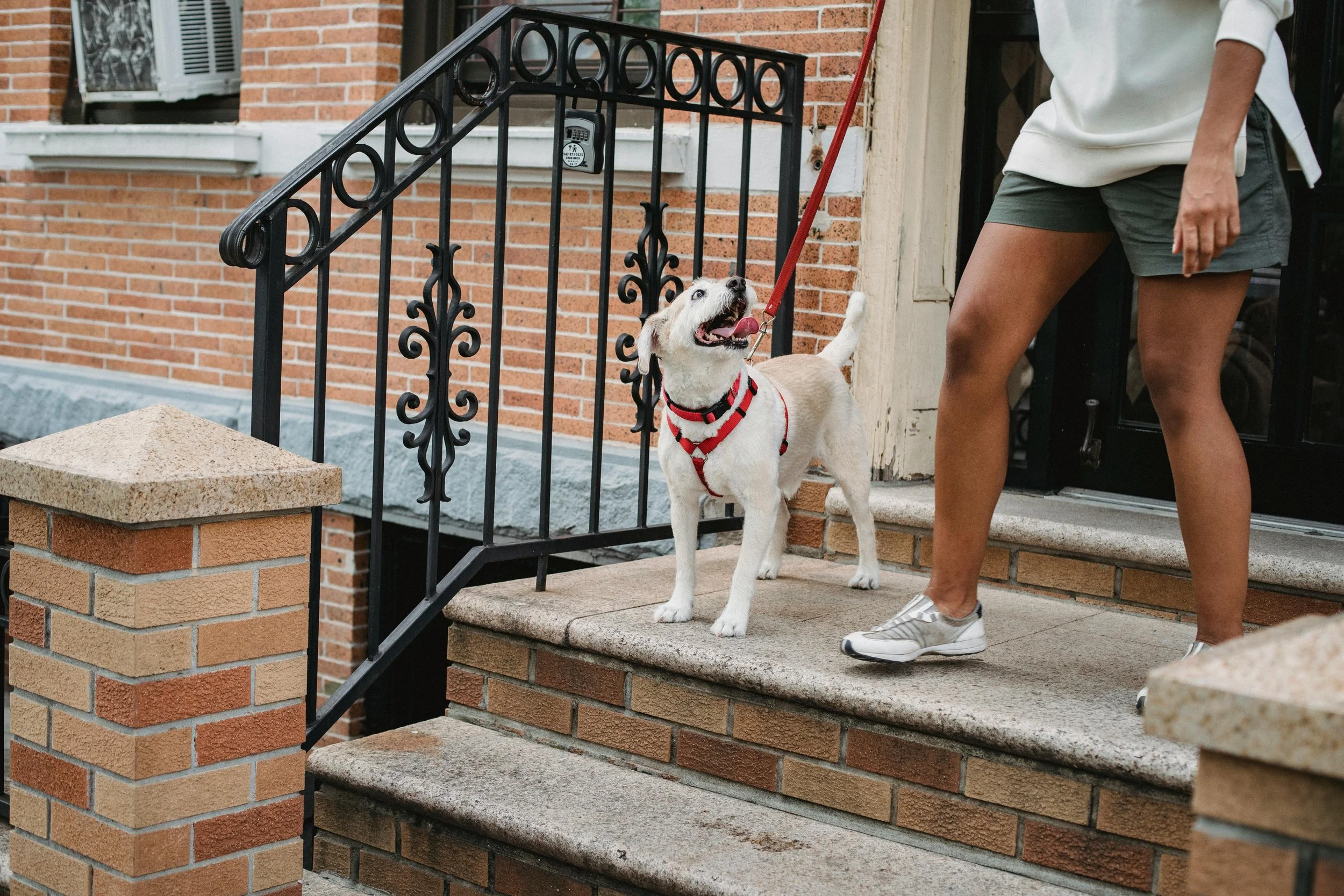
Say yes, give a high value reward, repeat. Work in short sessions of five to ten minutes at a time over several days until the dog's response to the marker is immediate and automatic. A marker that is not reliably charged will not compete with the arousal of a trigger when it is needed most.
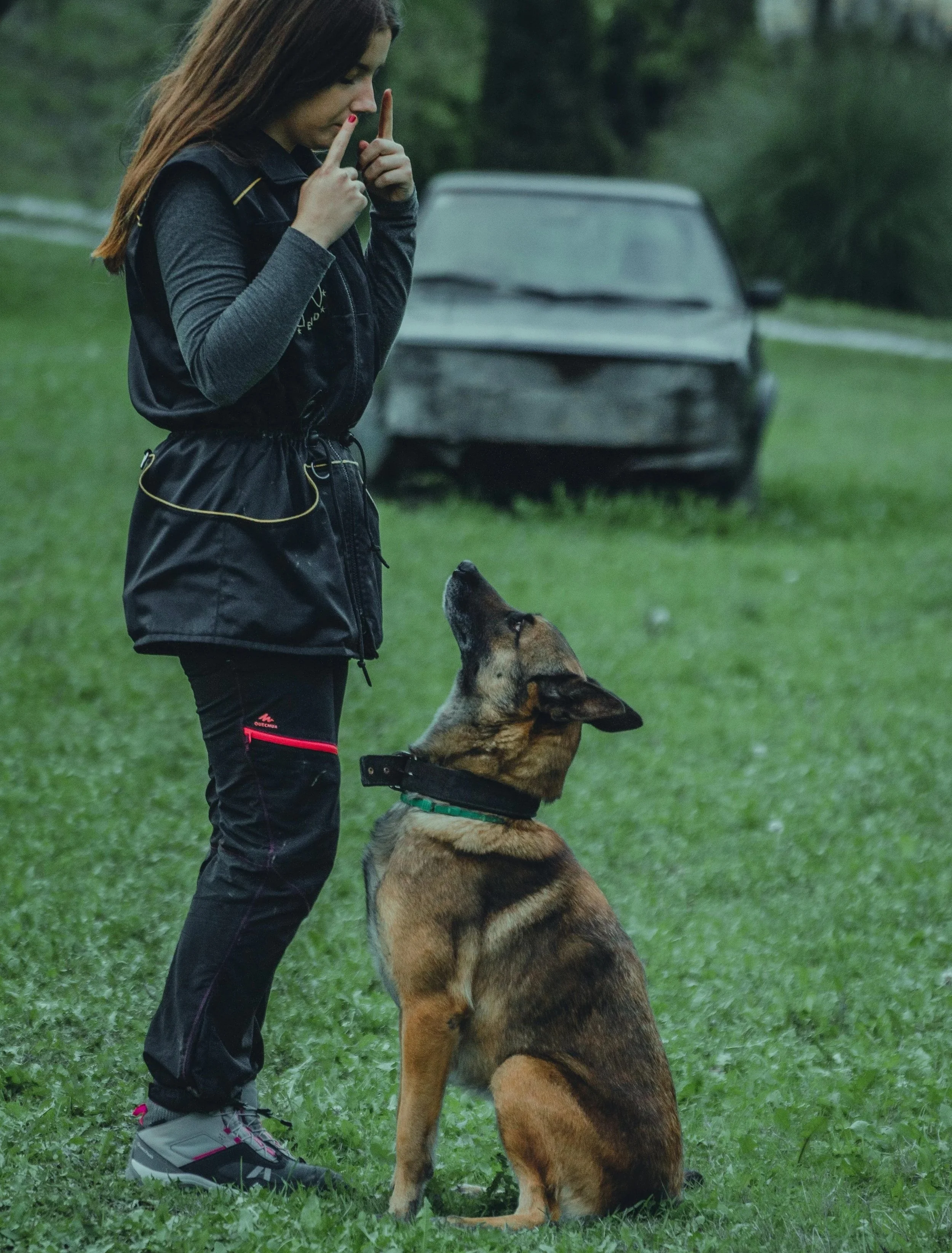
A foundation exercise commonly known as the Yes Game is one of the most valuable tools for building a positive association to triggers and teaching the dog that noticing something is a cue to orient toward the handler rather than react. It is also one of the exercises I rely on most consistently in my own work with reactive dogs, and the shift it produces in a dog's relationship to their triggers is something I watch happen with almost every client.
Once the marker is charged and engagement is solid in neutral environments, the Yes Game becomes the bridge to trigger work. The dog spots another dog in the distance. You mark yes and reward before the arousal has a chance to spike.
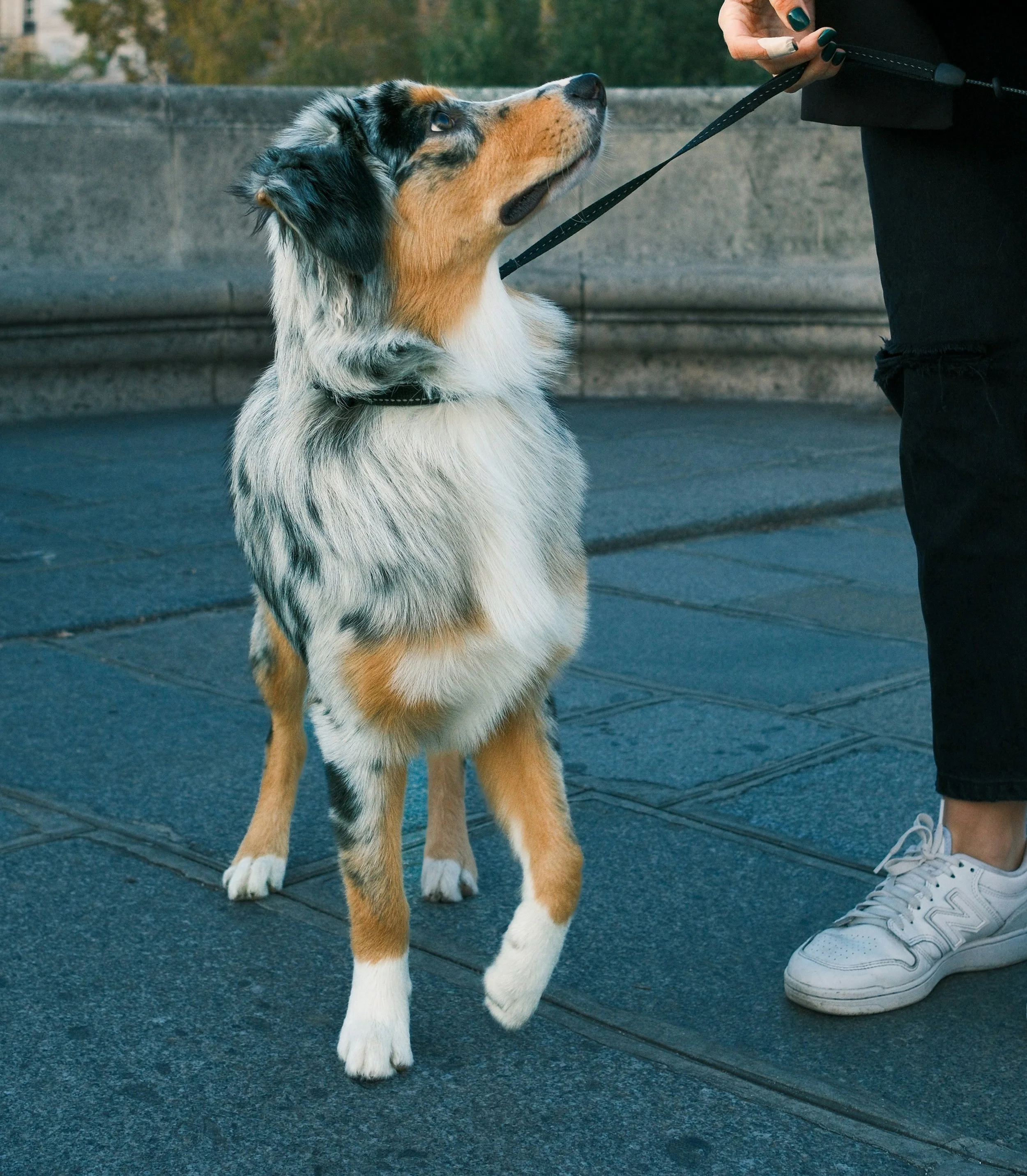
Over time the dog builds a positive association to the trigger itself and learns that spotting it is a cue to orient toward the handler rather than react. That automatic orientation response, built at low arousal before it is ever needed under pressure, is the foundation everything else gets built on.
For most dogs the goal of this work is not to make the handler more compelling than every trigger in every context, because for some dogs, particularly those with significant prey drive or arousal, certain triggers will always carry a strong pull regardless of how solid the foundation is. The goal is to build reliable alternative behaviors within the dog's working threshold, so that when a trigger appears the dog has both the skill and the habit of orienting to the handler rather than reacting, and the handler has the tools to support that choice.
Once engagement is solid and the marker is reliable, loose leash walking becomes possible to build. A dog who has never learned to walk without tension on the leash is starting every walk already in a state of low-level conflict with their handler, and that baseline tension compounds when a trigger appears.

Loose leash walking is built at home and in low distraction environments before it is ever expected on a busy street. The dog learns that staying in proximity to the handler and maintaining slack in the leash is what keeps the walk moving, and that understanding needs to be rehearsed hundreds of times in easy conditions before it means anything in hard ones.
Each skill also needs to be proofed at progressively higher levels of distraction before it is considered ready for trigger contexts. A behavior that works reliably at home does not automatically transfer to a parking lot, a trail, or a neighborhood street.
Proofing means practicing each skill in a variety of environments with gradually increasing distraction until the dog can perform it reliably before it is ever asked near a trigger. This step is one of the most commonly skipped and one of the most common reasons foundation work falls apart when it meets real world conditions.
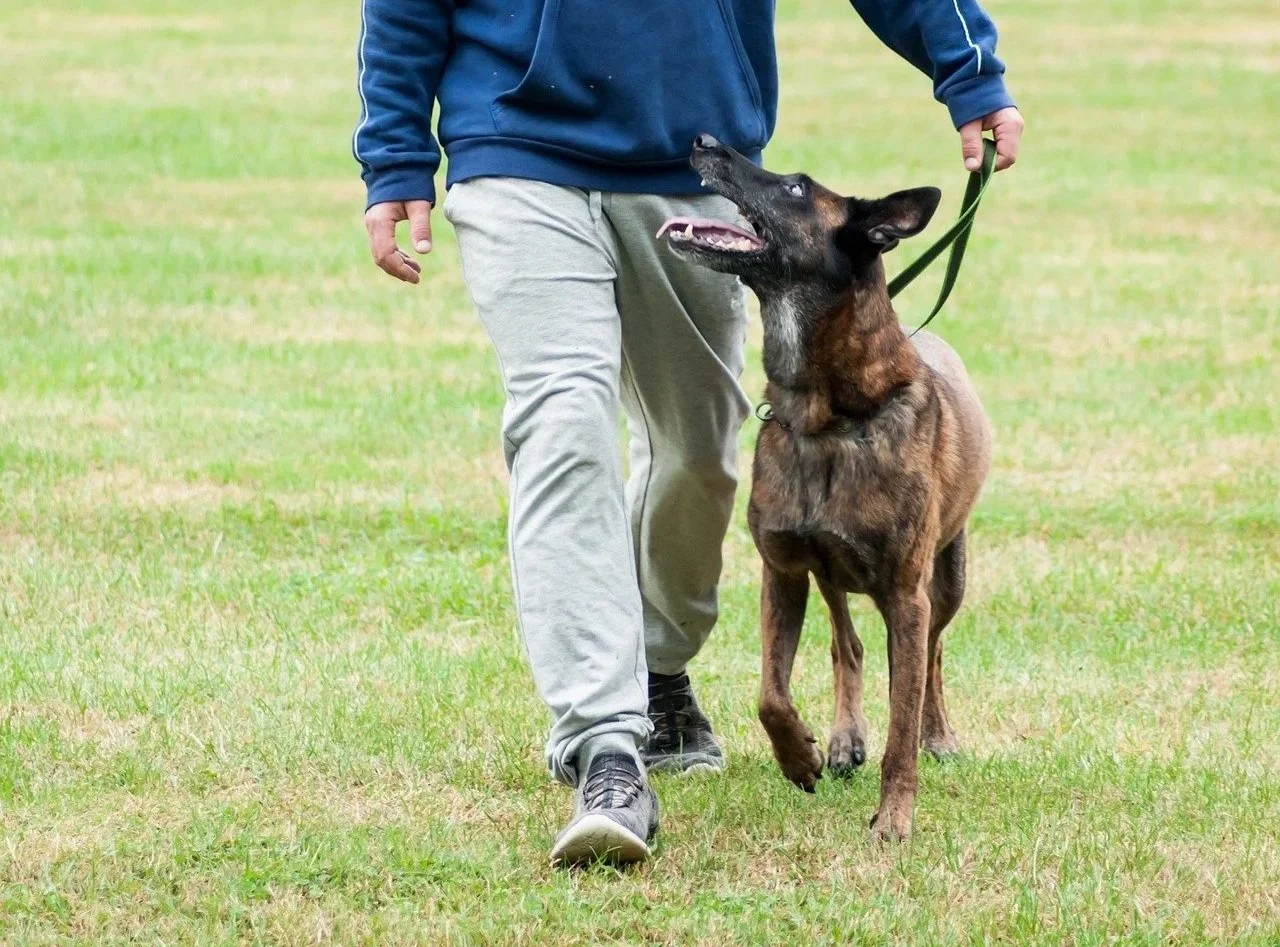
For dogs with significant drive or arousal, a formal heel or position behavior is worth building once the earlier skills are in place. Heel gives the dog a job to do on leash that requires sustained attention and keeps the dog physically and mentally oriented to the handler, which reduces the attention available for scanning and reacting.
Building heel with increasing duration and distance in progressively more distracting environments before expecting it near triggers is the same proofing principle applied to a more demanding skill. A strong heel becomes a tool the handler can use to structure the dog's attention before a trigger appears rather than scrambling to redirect after arousal has already spiked.
For dogs with fear-based reactivity, this entire step means prioritizing emotional safety and relationship building alongside the specific behaviors being taught. A dog who does not feel safe with their handler cannot reliably access learned behaviors under pressure, and time spent building that relationship through play, exploration, and low pressure positive experiences is not separate from the training. It is part of it.
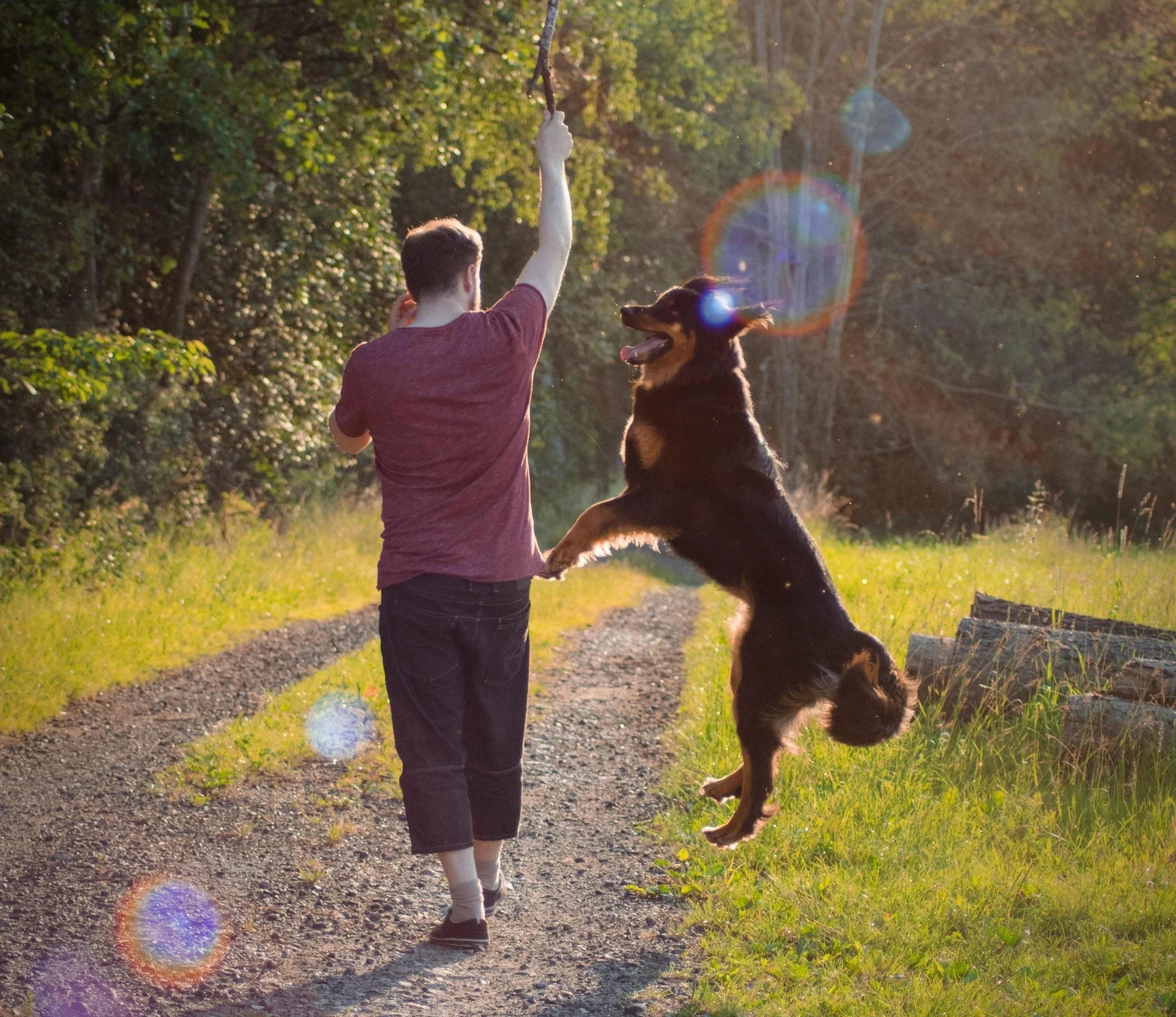
The behaviors being reinforced at this stage should reflect that priority, focusing on orienting to the handler, offering calm, and choosing to disengage from a trigger rather than react to it.
A foundation is solid enough to begin careful trigger work when the dog can maintain attention on the handler in low distraction environments reliably, check in voluntarily on walks in neutral environments, walk on a loose leash consistently in familiar environments, and disengage from mild distractions on cue before any trigger work begins. Those are the criteria. If any of them are not in place yet, the foundation work is not done.
Step Four: Differential Reinforcement
Once the foundation behaviors are reliable, the work shifts to asking for those behaviors in the presence of triggers at a manageable distance. The dog notices another dog, redirects their focus to the handler, gets reinforced. The dog notices a person across the street, checks in, gets reinforced.
The alternative behavior becomes the pattern, and with repetition and consistency it begins to replace the reactive response as the default.

Distance is reduced slowly and only when the dog is consistently successful at the current distance, because rushing this step is one of the most common reasons progress stalls.
The consistency requirement at this stage extends to everyone handling the dog. A dog who gets reinforced for checking in with one handler but is allowed to react with another is learning two different sets of rules, and the reactive pattern will persist in the contexts where it is still being practiced.
Step Five: Extinction, Negative Punishment, and Negative Reinforcement
Step five of the Humane Hierarchy covers extinction, negative punishment, and negative reinforcement.
Negative punishment means removing something the dog wants in order to reduce a behavior. With reactive dogs, that can look like removing their access to look at the trigger they are barking at. This is different from blocking a trigger before the behavior starts, which is antecedent arrangement in Step Two. Removing access because the dog started barking is negative punishment.
Negative reinforcement means removing something the dog finds aversive when the dog performs a behavior, which makes that behavior more likely. Leash pressure that releases when the dog stops pulling is an example.
As the alternative behavior becomes more reinforced and more practiced, the reactive behavior begins to extinguish because it is no longer the dog's only available response and is no longer producing the results it once did. This process is rarely linear.
There will be setbacks, days where the dog reacts at a distance they had previously handled, situations that catch the dog off guard. That is normal and expected and does not mean the training has failed.
An extinction burst, where the behavior temporarily intensifies before it improves, is also a normal part of the process and something to prepare for rather than interpret as regression.
Real cases rarely move through these steps in a clean linear progression. Most dogs loop between steps depending on context, arousal level, and the specific trigger, and progress is measured over weeks and months rather than session to session.
Step Six: Positive Punishment
Reaching this step does not mean corrections are the automatic next action. It means they become available as part of the approach when specific conditions have been met, and only under the guidance of a professional who can assess whether those conditions are genuinely in place and whether corrections are the appropriate next step for that specific dog.
The conditions that need to be met before corrections are introduced are straightforward but important. The dog needs to know the alternative behavior, be able to perform it reliably, and genuinely understand what is being asked of them. A dog who has those things in place can receive a well-timed correction as information that the reactive behavior is not the right choice, and redirect toward what they already know. Without that foundation, a correction has nothing to redirect toward and will not produce meaningful change.
Equally important is the dog's emotional state at the time of the correction. A dog who is shutting down, freezing, or showing signs of fear-based suppression is not a dog who needs a correction. That dog needs more foundation work and more support for their nervous system, not an escalation in consequence.
Corrections belong with dogs who have the foundation, the alternative behavior, and the emotional regulation to use them, and even then the timing, intensity, and proportionality of the correction matter enormously. Getting those things right is a skill that takes training to develop, which is why this step should not be attempted without professional guidance.
A verbal marker, a leash correction, or a tool-assisted correction using a prong collar or e-collar properly conditioned for that purpose can interrupt the behavior and redirect to the trained alternative when all of those conditions are in place.
The same standards apply as with any behavior work: timing, clarity, fairness, and proportionality. A correction used without a solid foundation, without a clear and well-reinforced alternative, or with a dog who is reacting out of fear rather than frustration or drive will not produce lasting change, and can make the emotional state fueling the behavior significantly worse.
Common Mistakes That Make It Worse
Flooding the dog with exposure and calling it socialization. Putting a reactive dog in situations where they are guaranteed to react is not training, it is rehearsal. Every repetition of the reactive behavior strengthens the pattern behind it, and no amount of unmanaged exposure changes that without the foundation work to support it. I have worked with dogs whose reactivity was significantly worsened by well-meaning puppy classes or socialization outings where the exposure was too much, too soon, or simply the wrong kind for that dog at that stage.
Allowing on-leash greetings during the training process. A dog who is working through leash reactivity should not be doing on-leash greetings while the behavior is being addressed. On-leash greetings put the dog in an unnatural social situation with no clean exit, and even a greeting that appears to go well can spike arousal and make the rest of the walk significantly harder.
Physically interrupting a reaction without understanding redirection risk. Grabbing a dog mid-reaction or stepping between them and a trigger without the right skills and timing creates a real risk of the dog redirecting their arousal onto the handler. Understanding how to interrupt a reaction safely is part of what you learn when working with a professional, not something to improvise in the middle of a reactive episode.
Letting one reactive dog trigger another. In multi-dog households or when walking dogs together, managing each dog's arousal independently matters. A dog who is calm alone may react when another dog in the group reacts first, and that pattern needs to be recognized and managed as its own dynamic rather than attributed solely to the dog who reacted first.
Punishing the reaction without building the alternative. A dog who is corrected for reacting but never taught what to do instead may suppress the behavior temporarily but has not learned anything. The emotional state and the lack of foundation remain, and in dogs reacting out of fear the emotional state can deepen significantly over time.
Ignoring the dog's daily environment. A dog who is chronically over-stimulated, under-exercised, or under-enriched is going to carry a lower threshold onto every walk. Training on the walk will only go so far if what is happening the other twenty-three hours of the day is not also being addressed.
Waiting for the dog to grow out of it. Leash reactivity rarely resolves on its own. Without intervention the pattern deepens with every walk, which means it is typically becoming more entrenched over time, not less. Reactivity that has been present for months or years rarely arrived that way overnight. It built through rehearsal, and in many cases through repeated reassurances from well-meaning people that the dog would eventually settle into it.
Using equipment as a substitute for training. A martingale collar, front-clip harness, prong collar, or any other tool can make a reactive dog more manageable in the short term, but no piece of equipment is a training plan. Without the underlying foundation work, the behavior may return when the equipment is changed or removed. If used improperly, any of these tools could actually increase the dog's reactivity and underlying fear, stress, or anxiety.
What You Can Do Right Now
Start by honestly identifying what your dog is reacting to and at what distance those reactions begin. That distance is your current threshold, and your job right now is to stay below it. Change your walking routes if you need to, choose lower traffic times, and give your dog enough space from triggers that they can notice them without reacting, because that is the space where learning happens.
Take an honest look at your dog's daily life before you focus on the walk. Is your dog getting adequate physical exercise and mental enrichment? Is their environment calm enough for their nervous system to regulate between outings? A dog whose baseline arousal is already high is going to struggle on walks regardless of how well the training is going, and sometimes the most impactful thing you can do has nothing to do with the leash.
Begin building engagement at home where there are no distractions. Mark and reward every time your dog offers eye contact voluntarily. Work in short sessions of five to ten minutes at a time. Once that is reliable, start charging your yes marker the same way, say yes, give a high value reward, repeat, until the response is fast and automatic.
Those two things together are the beginning of the foundation everything else gets built on, and they cost nothing but consistency and time. The yes marker and engagement work are the entry point, not the whole picture. Loose leash walking, proofing each skill across environments, and for some dogs formal heel work all need to come before trigger work begins, and that process takes weeks to months depending on the dog. Start where you are and build from there.
If your dog has a bite history, is displaying aggressive behavior, or feels genuinely unsafe on walks, please reach out for professional support rather than attempting to manage this on your own. A behavior assessment cuts through the guesswork and gives you a structured plan built around your specific dog and what they actually need. You can book directly at HeelingWithNature.com/Schedule.
Not sure if I am the right fit? Take my 2-minute quiz to find out at HeelingWithNature.com/Quiz.
Leash reactivity is one of the most workable behavior issues there is when it is approached correctly and with realistic expectations. Most dogs can make significant progress with the right foundation in place, and understanding what is actually behind the behavior is where that work begins.
This is part of an ongoing series called "Ask Tuesday." If you have a question about your dog's behavior or training, please submit it at HeelingWithNature.com/Ask-Tuesday. The answer might help more people than you expect.
Tues ☺️🐾🌿
Heeling with Nature serves clients in person throughout Connecticut and surrounding areas.
Virtual behavior assessments and consultations are available to owners anywhere.